
News Summary
Boneyard beaches in the Southeastern United States highlight the beauty and ecological importance of coastal landscapes marked by skeletal trees and vibrant wildlife. These areas, shaped by rising sea levels and coastal erosion, provide critical habitats for various species while offering stunning visitor experiences. Locations such as Jekyll Island and Bulls Island present unique opportunities for wildlife observation and adventure. The boneyard beaches symbolize nature’s impermanence and are crucial for storm mitigation and biodiversity, attracting tourists and nature enthusiasts alike.
Jacksonville, Florida – Boneyard Beaches Showcase Nature’s Haunting Coastal Landscapes
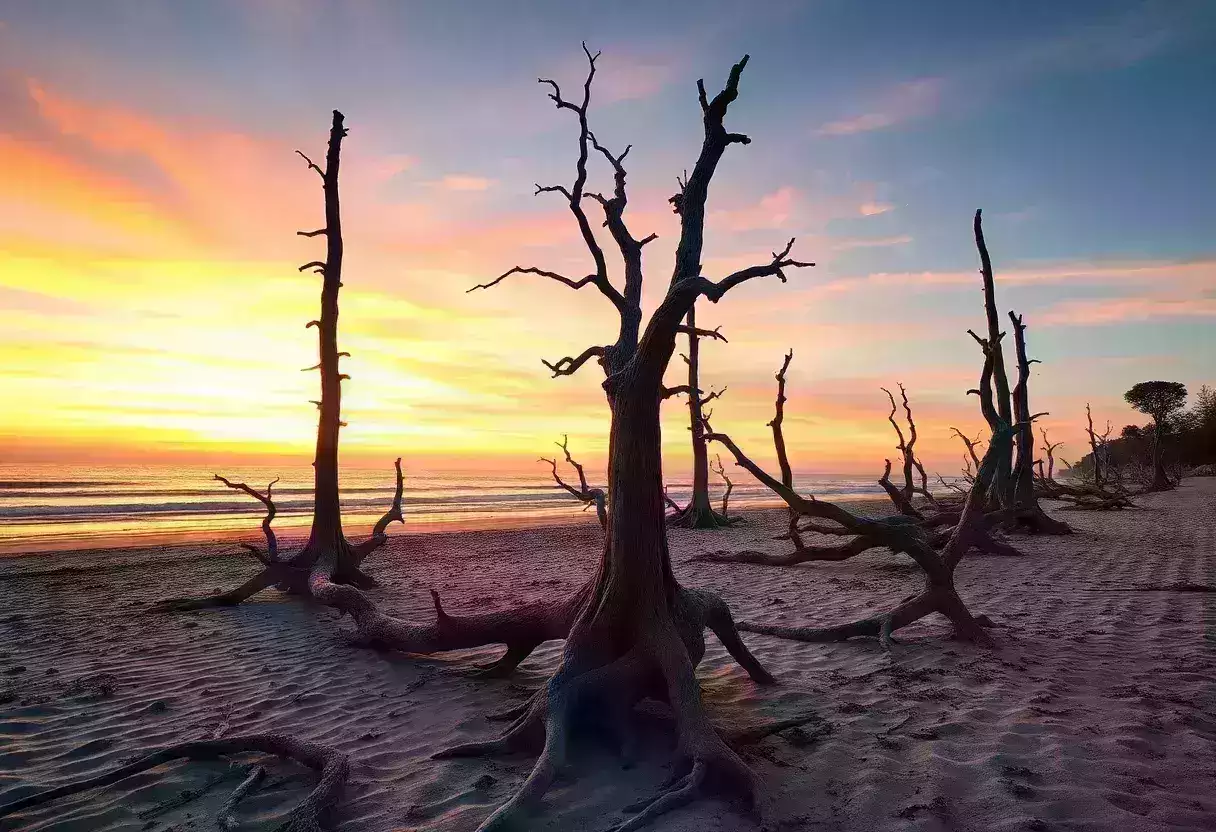
Boneyard beaches, known for their eerie beauty and ecological importance, are a notable feature along the Southeastern coast of the United States. These unique coastal landscapes, characterized by long-dead tree trunks and branches, have become areas of ecological significance and tourists’ fascination due to their striking appearance and vibrant wildlife.
Natural Processes and Their Impact
As coastal erosion and rising sea levels continue to threaten the coastline, trees such as live oaks, palmettos, red cedars, and pines are increasingly susceptible to increased salinity in their environments. As these trees die, they remain embedded in the beaches, serving a critical role in storm mitigation and erosion buffering for years. Even in death, these trees form diverse habitats that are crucial for a wide range of wildlife, including shorebirds, nesting ospreys, fiddler crabs, mollusks, amphipods, and sea turtles.
Highlighted Boneyard Beaches
Five notable boneyard beaches in the Southeastern region offer visitors stunning views and unique wildlife observation opportunities:
- Jekyll Island, Georgia: Accessible via a sandy path, this 1.3-mile stretch boasts beautiful views, especially at low tide.
- Bulls Island, South Carolina: Only reachable by boat, this island features gnarled oaks and diverse bird populations within the Cape Romain National Wildlife Refuge.
- Edisto Island, South Carolina: Known for its fossilized trees, this location also hosts wildlife such as alligators and numerous bird species.
- Beaufort, South Carolina: This lush state park, used for the filming of “Forrest Gump,” provides scenic trails leading to a boneyard beach.
- Jacksonville, Florida: Home to Boneyard Beach at Big Talbot Island State Park, this area showcases distinctive geological formations from the last ice age.
Optimal Visiting Conditions
Boneyard beaches are particularly photogenic during low tide and at sunrise or sunset, when the skeletal trees form stark silhouettes against the vibrant sky. For the best experience, visiting during spring and fall is recommended due to mild weather conditions and fewer crowds, while summer is the peak tourist season.
Wildlife Observation and Activities
Wildlife enthusiasts can observe sea turtles nesting from May to October on these beaches. Hunting Island State Park, located in South Carolina, features five miles of undeveloped beach, including 1.5 miles of boneyard beach, providing an excellent space for exploration and observation.
For visitors seeking adventure, the park offers hiking and biking trails that connect various habitats, along with guided tours to enhance the experience. Seasonal activities such as kayaking and boat tours are popular, and fishing spots can be found in areas like South Beach. The park also offers accommodations, including campsites, cabins, and lodging options for extended stays.
Historical Significance
Visitors to Hunting Island State Park can explore the historical Hunting Island Lighthouse, which was constructed in 1859, although it is currently closed for renovations. This landmark adds a cultural element to the natural beauty of the boneyard beaches, enriching the visitor experience.
Conclusion
Overall, boneyard beaches along the Southeastern coast serve as powerful reminders of nature’s impermanence. While they present hauntingly beautiful landscapes, these areas are also critical ecological habitats that offer unique recreational opportunities for those looking to escape traditional tourist attractions and seek out the serenity of nature.
Deeper Dive: News & Info About This Topic
HERE Resources
Hunting Island State Park Ranks #6 in Best Beaches in SC
Additional Resources
- Garden & Gun: The South’s Most Beautiful Boneyard Beaches
- Post and Courier: Charleston South Carolina Aquarium Touch Tank
- The Intelligencer: Boneyard Beach South Carolina
- The Travel: Tree Graveyard – One of South Carolina’s Most Spectacular Secret Beaches
- Travel + Leisure: South Carolina Beaches
- Wikipedia: Boneyard Beach
- Google Search: Boneyard Beaches South Carolina
- Encyclopedia Britannica: Boneyard Beach
- Carolina Sportsman: Boneyard Beach Flounder
- Island Packet: Local Environment News