

News Summary
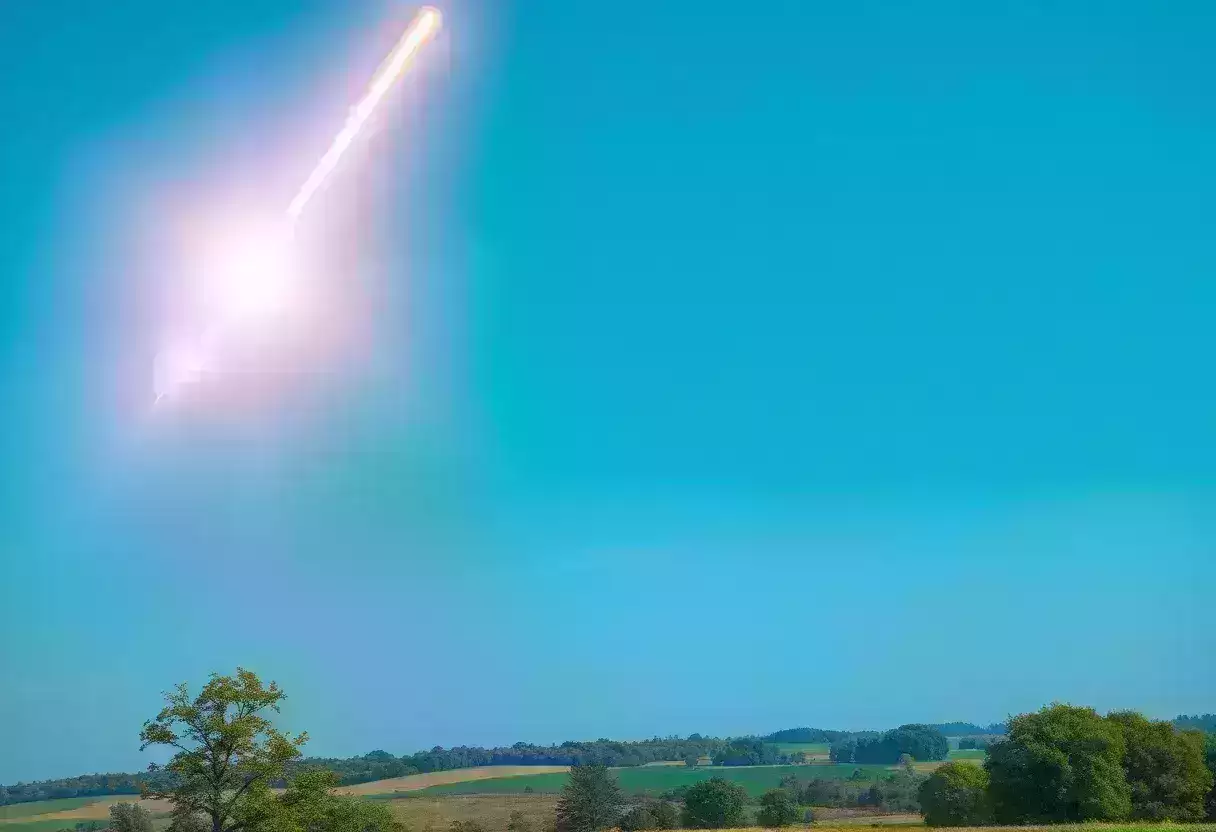
A brilliant fireball illuminated the Southeast U.S. skies, with reports flooding in from South Carolina and neighboring states. Eyewitness accounts described the fireball as bright and unusual, with sounds accompanying the streaking object. The National Weather Service confirmed its visibility across multiple states and categorized it as a Major Fireball Event. This remarkable phenomenon, coinciding with the June Bootid meteor shower peak, has sparked widespread online discussions as people share their sightings and experiences.
Charleston, S.C. – On June 26, a large fireball streaked across the skies of the Southeast United States, with numerous reports filed by excited eyewitnesses from various regions in South Carolina, as well as neighboring states. The National Weather Service confirmed the event, highlighting the widespread sightings from residents in Greenwood, Anderson, Clemson, Simpsonville, and across Beaufort, Hampton, and Jasper counties. Eyewitnesses described the fireball as an extraordinary sight that sparked a flurry of discussion on social media.
The fireball was not confined to South Carolina; it was visible in surrounding states, including Florida, Georgia, and Alabama. According to data collected, reports began surfacing between 12:30 p.m. and 1 p.m. on that day, leading to over 130 eyewitness accounts filed with the American Meteor Society from across 20 states. The society categorized the event as a Major Fireball Event, indicating its significance.
The National Weather Service in Charleston noted that many sightings were reported across the Southeast U.S. A satellite-based lightning detection system indicated a streak in a clear sky over the North Carolina-Virginia border between 11:51 a.m. and 11:56 a.m., providing crucial timing for the event. Reports from the region included descriptions of the fireball being “burning white-hot” and emanating an unusual brightness.
Witnesses illustrated the shock and awe the phenomenon generated. A resident from Sun City, S.C., described the fireball as “something, burning white-hot,” indicating its intense luminosity. Meanwhile, a Savannah, Georgia resident reported seeing a “bright orange, small in size” object, while another witness from Anderson commented on the rarity of witnessing a meteor during daylight.
Interestingly, reports indicated that the fireball was accompanied by unusual sounds, such as sonic booms and electrophonic sounds, which are rare for such events. The National Weather Service in Peachtree, Georgia, also mentioned potential roof damage resulting from debris associated with the fireball, including one report of a rock crashing through a ceiling and onto the floor.
The event coincided with the expected peak of the June Bootid meteor shower, which was slated to peak on June 27. Although thousands of meteors enter the Earth’s atmosphere daily, most are not visible during the day due to their trajectories falling over oceans or uninhabited areas. The American Meteor Society defines fireballs as meteors brighter than magnitude -4, comparable to the brightness of Venus.
Despite the excitement surrounding the event, the exact cause of the fireball remains undetermined. Speculation points towards it being either space debris or a large meteor. The Federal Aviation Administration reported no unusual aircraft activity in the vicinity during the time frame when the fireball was observed, further documenting the peculiar nature of the incident.
The interest generated by this meteor event has prompted a significant increase in online discussions, with many individuals sharing their experiences, videos, and images on platforms like X and Reddit. The rising number of sightings and discussions showcases the community’s fascination with the night sky and the natural wonders it holds.
As investigations continue and further details emerge, this remarkable event is expected to remain a topic of discussion among both astronomers and the general public, reinforcing humanity’s intrigue with the cosmos.
Deeper Dive: News & Info About This Topic
HERE Resources
Additional Resources
- Greenville Online
- Wikipedia: Meteor
- Count on 2
- Google Search: fireballs in the sky
- Post and Courier
- Google Scholar: Meteor events
- WTOC
- Encyclopedia Britannica: mystery fireball
- Post and Courier Meteor Shower
- Google News: fireball seen in sky