

Beaufort County, September 23, 2025
News Summary
A resident of Beaufort County has tragically passed away due to eastern equine encephalitis (EEE), marking the first confirmed human case since 2020 and the first fatality linked to this virus in South Carolina since 2003. The EEE virus, transmitted through mosquito bites, can lead to severe symptoms and a high fatality rate. Health officials stress the importance of prevention methods to mitigate the risks associated with mosquito-borne diseases, particularly for vulnerable populations.
Beaufort County, South Carolina – A Beaufort County resident has died after contracting eastern equine encephalitis (EEE), marking the first confirmed human case of EEE in South Carolina since 2020 and the first EEE-related fatality in the state since 2003. The South Carolina Department of Public Health reported the death on September 19, raising awareness about the dangers associated with this rare but potentially deadly virus.
The EEE virus is transmitted to humans through the bite of infected mosquitoes. Following a bite, severe symptoms may appear four to ten days later, including fever, headache, vomiting, diarrhea, seizures, behavioral changes, and drowsiness. Approximately 30% of individuals who experience severe symptoms of EEE die within 10 days. Furthermore, many survivors suffer from long-term neurological damage. However, only 4-5% of human infections result in EEE, with most infections remaining asymptomatic.
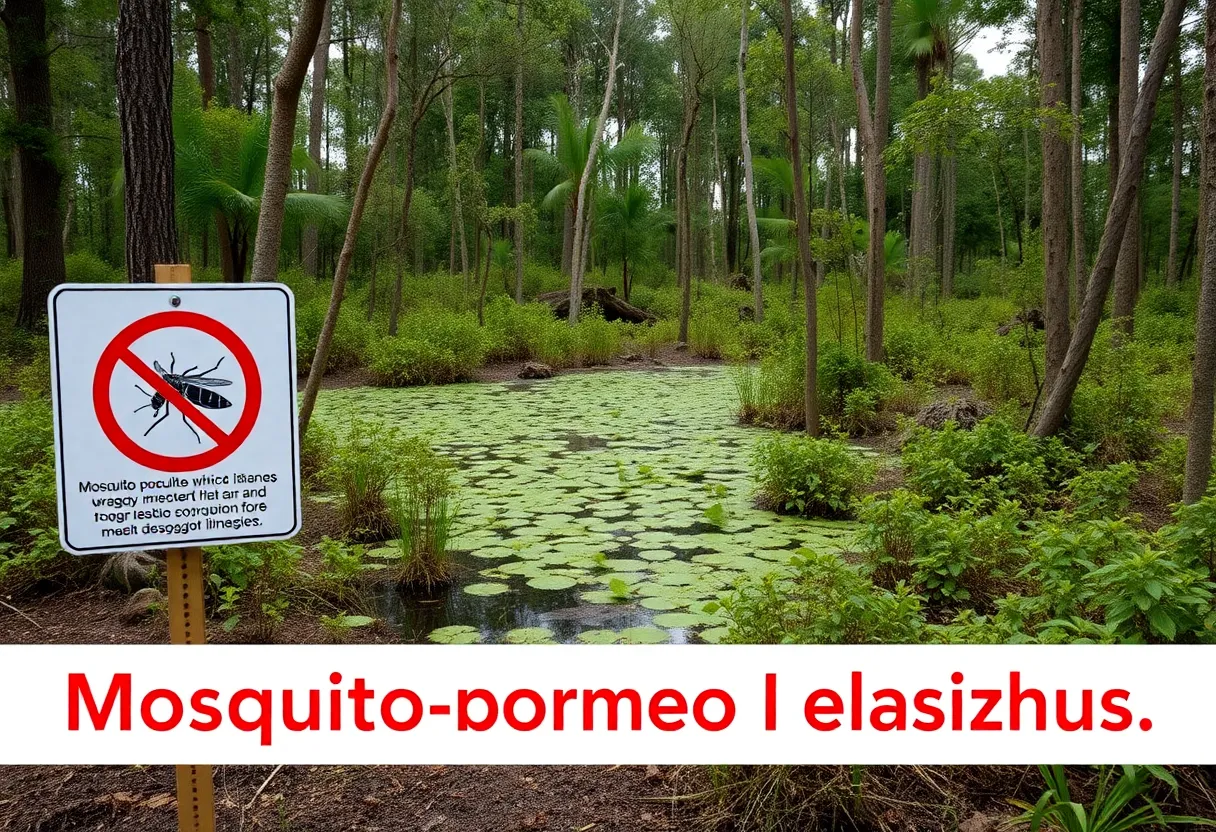
Humans and other mammals, such as horses, serve as “dead-end hosts” for the EEE virus, meaning they do not transmit the virus further. The EEE virus infects mosquitoes after they feed on infected birds, which are typically found in swampy, wooded areas. In 2025, 10 EEE-virus positive horses were reported across South Carolina, primarily in Aiken, Colleton, Horry, Jasper, Orangeburg, and Sumter counties. EEE is most commonly found in Atlantic and Gulf Coast states, as well as in regions surrounding the Great Lakes.
To mitigate the risk of contracting EEE, health officials recommend avoiding mosquito bites. Prevention methods include eliminating mosquito breeding sites and following the “7 Ts” for maintaining mosquito-free homes and yards. The Beaufort County Mosquito Control has initiated multiple mosquito sprays via truck and plans to spray by helicopter to ensure comprehensive coverage. Additionally, increased area trapping and laboratory analysis of the mosquito population are ongoing efforts in Beaufort County.
Health experts emphasize that while the risk of contracting EEE is low, awareness and prevention are essential, particularly for vulnerable groups such as individuals over 50 and children under 15. There is currently no vaccine or specific medical treatment available for EEE infections in humans, underscoring the importance of preventive measures.
Background on Eastern Equine Encephalitis
Eastern equine encephalitis is classified as a rare but serious viral illness primarily transmitted by mosquitoes. The virus has been associated with outbreaks in the United States, mainly occurring near freshwater hardwood swamps that support mosquito populations. Preventive measures are crucial as the virus poses significant health risks, especially to certain age groups. Continued public awareness campaigns and response efforts are crucial in reducing infections and fatalities.
Key Points of the EEE Outbreak in South Carolina
- First confirmed human death from EEE: Beaufort County, South Carolina
- First EEE-related fatality in the state since 2003
- Virus spread through infected mosquito bites
- High fatality rate, approximately 30% for severe EEE symptoms
- Most infected individuals experience asystematic symptoms
- No vaccine or specific treatment available for human infections
- Public health measures include mosquito spraying and breeding site elimination
FAQ Section
What is Eastern Equine Encephalitis (EEE)?
EEE is classified as a rare but potentially deadly virus spread to humans through the bite of infected mosquitoes.
How did the recent case in South Carolina happen?
A Beaufort County resident recently died after contracting eastern equine encephalitis (EEE). This incident marks the first confirmed human case of EEE in South Carolina since 2020.
What are the symptoms of EEE?
Severe symptoms of EEE may include fever, headache, vomiting, diarrhea, seizures, behavioral changes, and drowsiness, typically appearing four to ten days after a mosquito bite.
Is there a vaccine for EEE?
There is currently no vaccine or medical treatment for EEE infection in humans.
How can I prevent EEE infection?
The best way to prevent EEE infection is to avoid mosquito bites. The South Carolina Department of Public Health encourages mosquito bite prevention by eliminating mosquito breeding sites.
Key Features of EEE
| Feature | Description |
|---|---|
| Transmission | Spread through infected mosquito bites |
| Fatality Rate | Approximately 30% for severe cases |
| Symptoms Onset | Symptoms typically appear 4-10 days after a bite |
| Prevention | Avoid mosquito bites; eliminate breeding sites |
| Current Treatment | No vaccine or specific medical treatment available |
Deeper Dive: News & Info About This Topic
HERE Resources
Beaufort County Reports First EEE Death in Over Two Decades
First Human Death from Eastern Equine Encephalitis in Two Decades
Beaufort, South Carolina Reports First Human Death from Eastern Equine Encephalitis in Over 20 Years
First Human Death from Eastern Equine Encephalitis in South Carolina
First Death from Eastern Equine Encephalitis in Beaufort County
First Death from Eastern Equine Encephalitis Reported in Beaufort County
First Eastern Equine Encephalitis Death in Beaufort County
First Human Death from Eastern Equine Encephalitis in Beaufort County
First Human Death from Eastern Equine Encephalitis Confirmed in Beaufort County
Beaufort County Reports First Confirmed Death from EEE Virus
Additional Resources
- Island Packet
- Wikipedia: Eastern equine encephalitis
- Live 5 News
- Google Search: eastern equine encephalitis
- WYFF 4
- Google Scholar: eastern equine encephalitis
- Greenville Online
- Encyclopedia Britannica: eastern equine encephalitis
- WLTX
- Google News: eastern equine encephalitis