

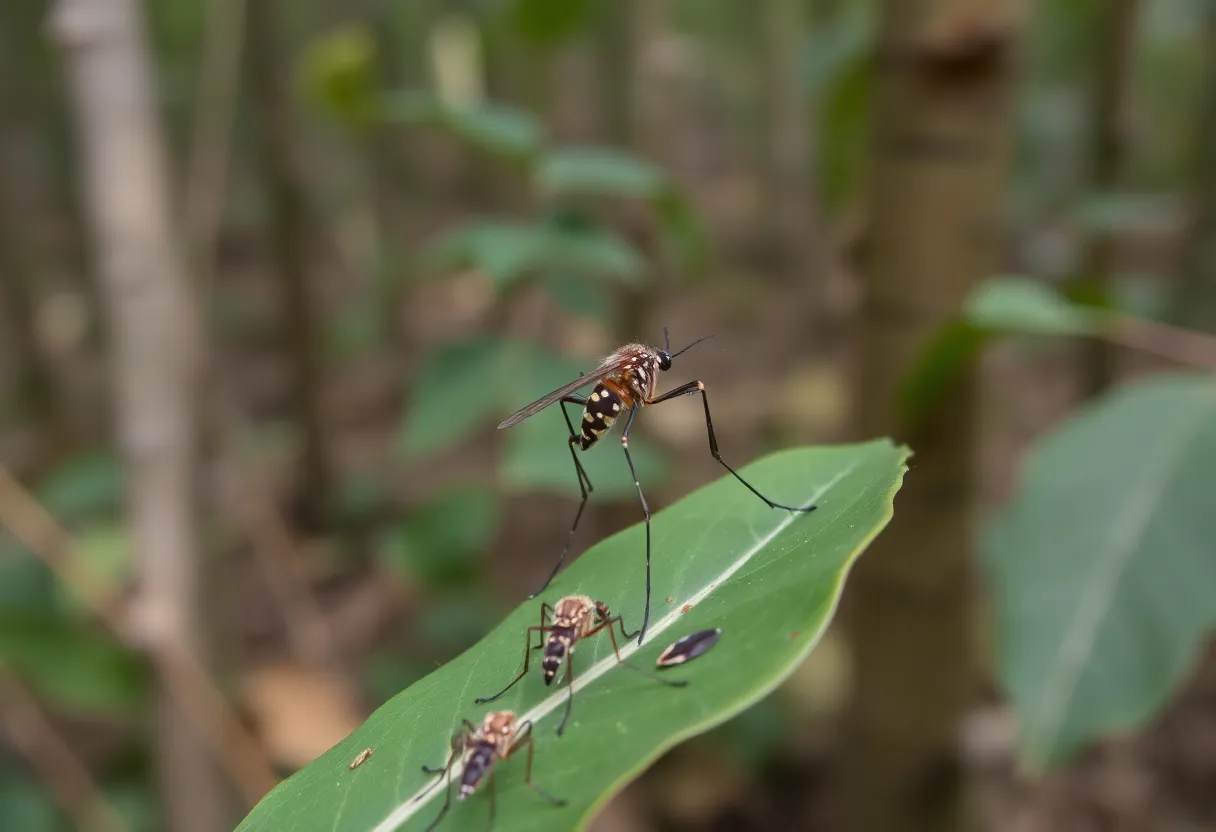
Beaufort County, September 24, 2025
News Summary
A resident in Beaufort County has succumbed to eastern equine encephalitis (EEE), marking South Carolina’s first human fatality from the virus since 2003. The case highlights the significant health risks posed by mosquito-borne viruses. Symptoms of EEE include fever, headache, and seizures, with a fatality rate for severe cases at around 30%. The South Carolina Department of Public Health urges residents to take mosquito prevention measures seriously as they respond to this alarming incident.
Beaufort County, South Carolina Reports First Human Death from Eastern Equine Encephalitis Since 2003
A Beaufort County resident has died after contracting eastern equine encephalitis (EEE), marking the first confirmed human case of EEE in South Carolina since 2020 and the first EEE-related fatality in the state since 2003. The South Carolina Department of Public Health (SCDPH) announced the death on September 19, 2025, emphasizing the importance of mosquito prevention measures.
EEE is a rare but potentially deadly virus spread to humans through infected mosquito bites. According to the Centers for Disease Control and Prevention (CDC), an average of 11 human cases of EEE are reported annually in the United States. The fatality rate for severe EEE cases is approximately 30%, and many survivors experience long-term neurological damage, highlighting the serious risks associated with the virus.
Symptoms of EEE typically appear four to 10 days after a mosquito bite and may include fever, headache, vomiting, diarrhea, seizures, behavioral changes, and drowsiness. There is currently no vaccine or specific medical treatment available for EEE, which exacerbates the concerns surrounding the virus.
Context and Background on EEE
The virus is maintained in nature through a cycle involving infected birds and mosquitoes, which are commonly found in swampy, wooded areas. Humans and other mammals, including horses, can become infected through mosquito bites but serve as “dead-end hosts” for the virus, meaning they cannot transmit it further. In 2025, SCDPH confirmed 10 EEE-virus positive horses in various counties in South Carolina, including Aiken, Colleton, Horry, Jasper, Orangeburg, and Sumter.
EEE is most frequently reported in Atlantic and Gulf Coast states and around the Great Lakes. The CDC advises individuals living in or visiting high-risk areas, especially those over 50 and under 15, to take precautions against mosquito bites. Health officials recommend eliminating mosquito breeding sites and following the “7 Ts” for mosquito prevention.
In response to the recent case, Beaufort County Mosquito Control has initiated multiple spraying applications and plans to enhance mosquito trapping and surveillance efforts to minimize the risk of further infections. The nearest routine surveillance trap to the case site was reported to be approximately 2.5 miles away, with no EEE-positive mosquitoes detected in 2025.
Precautions and Recommendations
Residents are urged to wear protective clothing and use EPA-registered repellents to reduce their exposure to mosquitoes. These preventative measures are critical in combatting the spread of EEE and ensuring the safety of the community.
Statistics on EEE
- Average reported human cases in the U.S. annually: 11
- Fatality rate for severe EEE cases: 30%
- Recent active EEE-virus positive horses reported in South Carolina: 10
- Geographical prevalence: Most common in Atlantic and Gulf Coast states and around the Great Lakes
- Noteworthy symptoms: Fever, headache, vomiting, seizures, and drowsiness
FAQ Section
What is Eastern Equine Encephalitis (EEE)?
EEE is a rare but potentially deadly virus spread to humans through infected mosquito bites.
How many human cases of EEE are reported in the U.S. annually?
On average, 11 human cases of EEE are reported in the United States each year, according to the CDC.
What is the fatality rate for severe EEE cases?
The fatality rate for severe EEE cases is about 30%, with many survivors suffering long-term neurological damage.
What are some symptoms of EEE?
Symptoms of EEE include fever, headache, vomiting, diarrhea, seizures, behavioral changes, and drowsiness, typically appearing four to 10 days after a mosquito bite.
Deeper Dive: News & Info About This Topic
HERE Resources
Beaufort County Resident Dies from Eastern Equine Encephalitis
Beaufort County Reports First EEE Death in Over Two Decades
First Human Death from Eastern Equine Encephalitis in Two Decades
Beaufort, South Carolina Reports First Human Death from Eastern Equine Encephalitis in Over 20 Years
First Human Death from Eastern Equine Encephalitis in South Carolina
First Death from Eastern Equine Encephalitis in Beaufort County
First Death from Eastern Equine Encephalitis Reported in Beaufort County
First Eastern Equine Encephalitis Death in Beaufort County
First Human Death from Eastern Equine Encephalitis in Beaufort County
First Human Death from Eastern Equine Encephalitis Confirmed in Beaufort County
Additional Resources
- WYFF4: South Carolina EEE Virus Death
- Wikipedia: Eastern Equine Encephalitis
- Live 5 News: SC Confirms First Human EEE Death
- Google Search: Eastern Equine Encephalitis
- Island Packet: First EEE Human Death in South Carolina
- Encyclopedia Britannica: Eastern Equine Encephalitis
- WJCL: Beaufort County Mosquito-Borne EEE Virus Death
- Google News: EEE Virus South Carolina
- WPDE: SC DPH Reports First EEE Virus Death in 20 Years
- Google Scholar: Eastern Equine Encephalitis South Carolina
- Bluffton Today: South Carolina Person Killed by Mosquito Disease