

Beaufort SC, October 23, 2025
News Summary
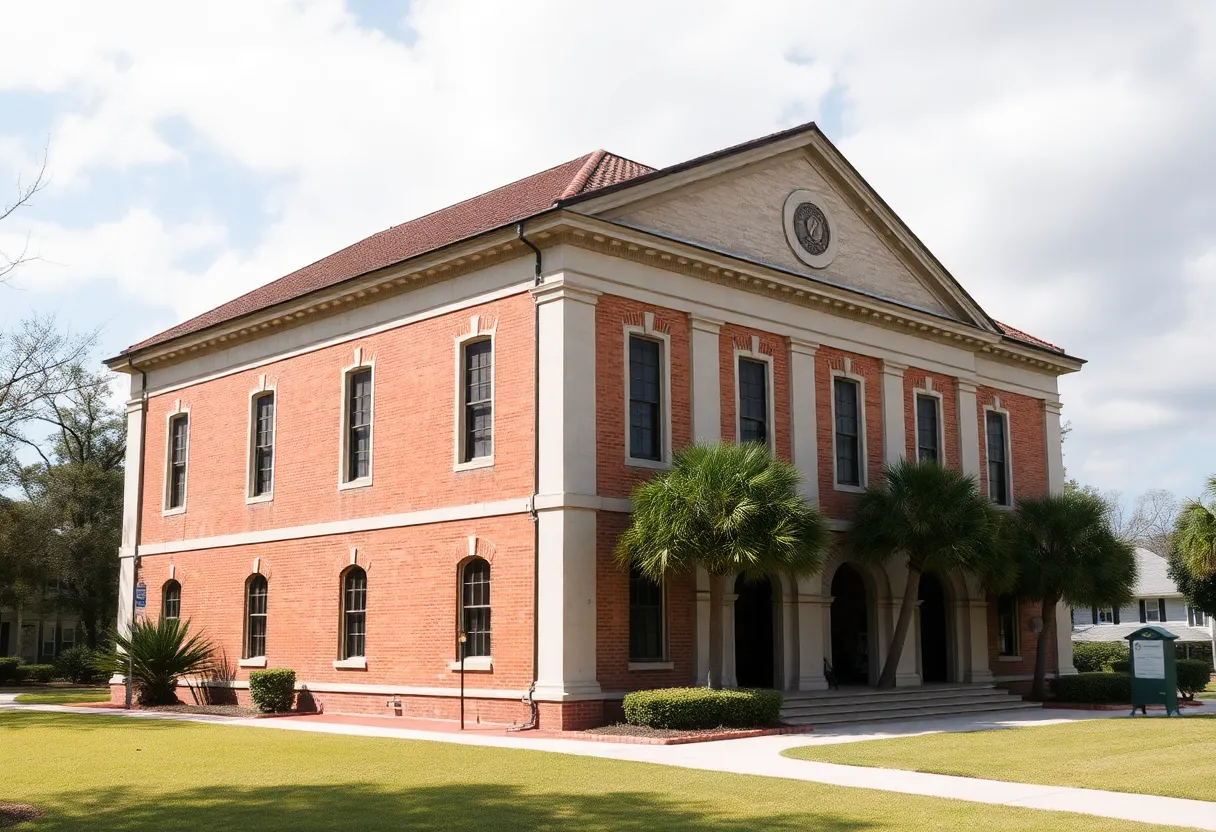
The Arsenal building in Beaufort, SC, constructed in 1798, plays a pivotal role in the state’s history, associated with key events in the Declaration of Independence. Initially a military headquarters, it has transitioned through various uses over the years, including a police station. Recent reenactments have engaged the local community, highlighting its lasting significance as a historical site and public event space.
Beaufort, SC – The Arsenal building, one of the oldest structures in South Carolina’s second oldest city, holds significant historical importance that goes beyond its age. Constructed in 1798, the building is associated with prominent events referenced in the Declaration of Independence, underscoring its role in shaping early American governance.
Lawrence Roland, a professor emeritus at the University of South Carolina Beaufort, emphasized the historical relevance of the Arsenal. In 1772, the South Carolina legislature denied a budget for British Royal Governor Lord Charles Greville Montagu on the Arsenal’s grounds. This pivotal decision led to the governor’s removal by the King, marking a unique legislative event in South Carolina not replicated in other colonies like Boston, New York, or Philadelphia. This event inspired Palmetto State signers of the Declaration of Independence, contributing to the formation of the fourth grievance against King George III regarding the coercive convening of legislative bodies in inconvenient locations.
Throughout its history, the Arsenal has served various roles. Following its construction, it became the headquarters for the Beaufort Volunteer Artillery, which is among the oldest organized military units in the United States. This artillery unit played key roles in the War of 1812 and the Civil War, and the building housed essential military supplies, including cannons and gunpowder. Serving as a refuge during attacks, the Arsenal transitioned into a police headquarters and jail after the city of Beaufort was chartered in 1803.
The Arsenal’s military significance continued during the Civil War when Union forces captured Beaufort after a notable naval assault in 1861, marking it as the first Southern city to fall to Union troops. Today, the building serves as a public event space and a tourist attraction, celebrated for its sturdy construction that has preserved it as a historical artifact.
Recently, the Beaufort History Museum hosted a Revolutionary War Living History Reenactment at the Arsenal, drawing participation from local children who engaged in historical roles. The event featured cannon firings, allowing children to choose sides as either Patriots or Loyalists in a recreation of the Battle of Port Royal Island. Funded by a grant from the 250th anniversary of the South Carolina American Revolution Sestercentennial Commission (SC250), participants experienced historical military drills, period medical practices, and learned safe musket handling using replicas.
Originally designed by Colonel Thomas Tailbird in 1795 at a cost of $2,500, the Arsenal was constructed using Tabby and covered with tiles. Despite facing disrepair by the 1850s, local planters and landowners raised funds to rebuild and expand the structure, adding a drill area to solidify its military purpose. The Arsenal has undergone multiple renovations, including significant reconstruction from 1935 to 1940, during which wings and additional second-floor features were added.
The Beaufort Volunteer Artillery, initially commissioned in 1802 with roots dating back to a 1776 company formed during the Revolutionary War, underwent reorganization in 1878 after the Civil War and continued to play significant roles in various military conflicts. Today, the Arsenal stands as a testament to the rich history of Beaufort and serves multiple functions as the home to the Beaufort History Museum and a community space for local events.
Key Features of the Arsenal Building
| Feature | Description |
|---|---|
| Construction Year | 1798 |
| Notable Events | 1772 budget denial leading to governor’s removal |
| Military Significance | Headquarters for Beaufort Volunteer Artillery |
| Historical Use | Housed military supplies, served as police HQ and jail |
| Civil War Role | First Southern city captured by Union forces |
| Current Usage | Public event space and tourist attraction |
FAQ
What is the historical significance of the Arsenal building in Beaufort, SC?
The Arsenal building is significant for its association with events referenced in the Declaration of Independence, including a pivotal budget denial to the British Royal Governor in 1772.
What roles has the Arsenal building served throughout its history?
The Arsenal has served as a military headquarters, housed supplies, acted as a police headquarters and jail, and is now a public event space and museum.
When was the Beaufort Volunteer Artillery commissioned?
The Beaufort Volunteer Artillery was commissioned in 1802, with historical roots dating back to a company formed in 1776 during the Revolutionary War.
Deeper Dive: News & Info About This Topic
HERE Resources
Beaufort Approves $73.1 Million Budget for Community Projects
Additional Resources
- WTOC: Historic Beaufort Arsenal Connects to the Declaration of Independence
- Wikipedia: Beaufort, South Carolina
- Your Island News: BHM Arsenal Hosting Revolutionary War Reenactment
- Google Search: Beaufort Arsenal history
- Explore Beaufort SC: Revolutionary War Reenactment at Beaufort Arsenal
- Encyclopedia Britannica: Revolutionary War
- Eat Stay Play Beaufort: Beaufort’s Historic Arsenal
- Google News: Beaufort Arsenal
- Explore Beaufort SC: Union Troops to Take Over Beaufort, SC in November
- World Atlas: Most Overlooked South Carolina Towns for 2025