
Beaufort County, January 15, 2026
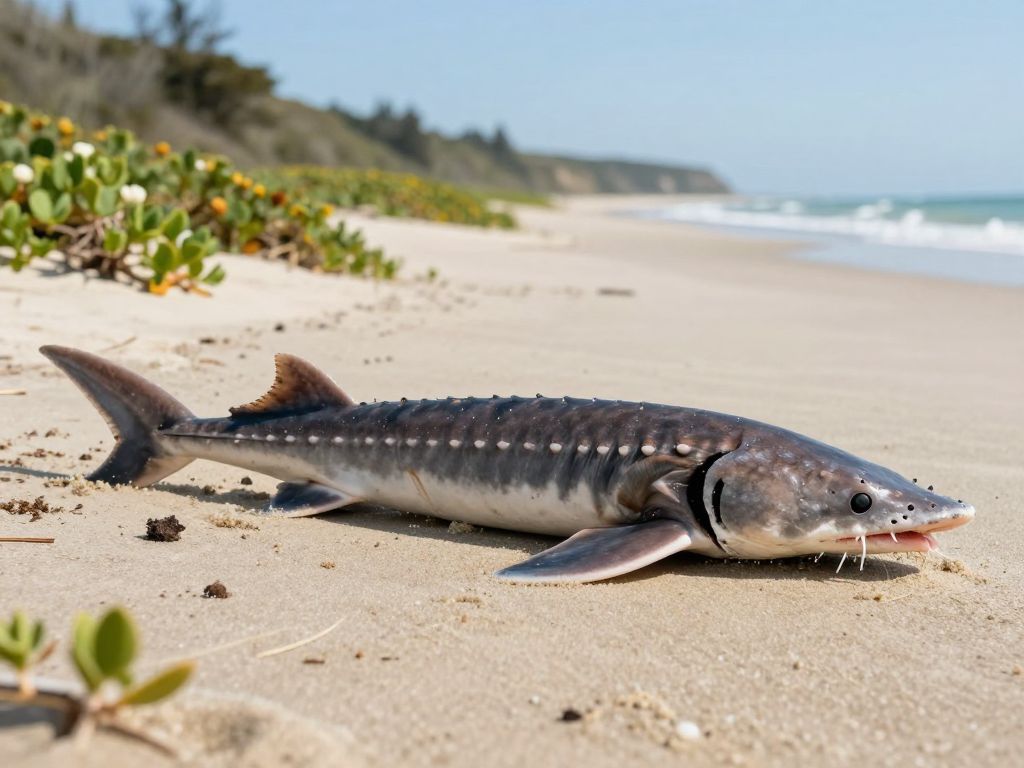
A rare Atlantic sturgeon, a species often referred to as a ‘living fossil’, washed ashore on a Beaufort County beach. This incident highlights the ongoing challenges faced by the critically endangered fish as it continues to appear on local shores. Authorities were notified and the fish was retrieved for further study. The Atlantic sturgeon is listed as endangered under the Endangered Species Act, with significant threats impacting its recovery.
Beaufort
A rare Atlantic sturgeon, a species often referred to as a “living fossil” due to its ancient lineage dating back over 200 million years, washed ashore on a Beaufort County beach on Sunday, January 12, 2026. This marks another instance of the critically imperiled fish appearing on local shores, with a similar event occurring in November on Hilton Head Island and one on Edisto Beach in July 2024. The sturgeon was discovered by a Fripp Island resident who promptly reported it to the South Carolina Department of Natural Resources (SCDNR). A staff member was dispatched the following day to retrieve the fish for further study.
Conservation Status and Rarity
The presence of an Atlantic sturgeon on a beach is considered rare because the species itself is rare. All five U.S. Atlantic sturgeon Distinct Population Segments (DPSs) are listed as either endangered or threatened Nationwide under the Endangered Species Act (ESA). Specifically, the Carolina DPS, which includes South Carolina populations, is listed as endangered. Historically abundant, their populations declined drastically due to overfishing in the late 19th and early 20th centuries, primarily for their highly prized eggs (caviar). Commercial landings plummeted from nearly 7 million pounds in 1887 to only 400 pounds by 1989. A Nationwide moratorium on Atlantic sturgeon fishing has been in place since 1998, with a coastwide moratorium through at least 2038 to allow for population recovery.
Characteristics of a Prehistoric Fish
Atlantic sturgeons are among the largest and longest-lived fish in North America. They can reach lengths of up to 14 feet and weigh over 800 pounds, with some individuals living to be 60 years or older. Instead of scales, they possess five rows of bony plates called scutes along their bodies, giving them a distinct prehistoric appearance. They have an elongated snout with four barbels (sensory organs) in front of a vacuum-like, toothless mouth located on the underside of their head, which they use to feed on bottom-dwelling invertebrates like crustaceans, worms, and mollusks.
Habitat and Life Cycle
Atlantic sturgeon are anadromous, meaning they live most of their lives in saltwater marine and estuarine environments but migrate up large freshwater rivers to spawn. In South Carolina, they utilize rivers such as the Edisto, Savannah, and Pee Dee for spawning and as nursery grounds, with spawning occurring in both fall and spring. Juveniles typically remain in freshwater or brackish waters for 2 to 6 years before migrating to the ocean to mature. They are known to travel widely along the East Coast once they leave their natal rivers. South Carolina populations generally mature between 5 and 19 years of age and live for 25 to 30 years.
Threats to Recovery
Despite protection under the ESA, Atlantic sturgeon populations still face significant threats. These include bycatch mortality (accidental capture in fishing gear), habitat degradation, and habitat impediments such as dams that block access to vital spawning grounds. Vessel strikes also pose a threat, particularly in riverine habitats. Additionally, poor water quality, including pollution and low oxygen levels, can harm sturgeon larvae and juveniles, while dredging activities can destroy spawning habitats. Climate change, with its potential to alter water temperatures and salinity patterns, further exacerbates these challenges.
Reporting Sturgeon Sightings
The SCDNR encourages the public to report any sightings of stranded, injured, or dead sturgeon. Such reports are crucial for scientists to collect data, understand population dynamics, track recovery efforts, identify threats, and fill knowledge gaps to protect these endangered species. If an Atlantic sturgeon is accidentally caught, it is advised to keep the fish in the water and release it immediately.
Frequently Asked Questions (FAQ)
Here are answers to common questions about Atlantic sturgeon:
What is an Atlantic sturgeon?
An Atlantic sturgeon is a large, prehistoric fish species often referred to as a “living fossil” due to its ancient lineage dating back over 200 million years.
What is the conservation status of Atlantic sturgeon?
All five U.S. Atlantic sturgeon Distinct Population Segments (DPSs) are listed as either endangered or threatened Nationwide under the Endangered Species Act (ESA). The Carolina DPS, which includes South Carolina populations, is listed as endangered.
How large can Atlantic sturgeon grow?
Atlantic sturgeon can reach impressive sizes, growing up to 14 feet in length and weighing over 800 pounds.
What do Atlantic sturgeon eat?
Atlantic sturgeon are bottom feeders, primarily consuming invertebrates such as crustaceans, worms, and mollusks, as well as some bottom-dwelling fish.
Where do Atlantic sturgeon live and reproduce?
Atlantic sturgeon are anadromous; they live in saltwater environments but migrate to large freshwater rivers to spawn. In South Carolina, they spawn in rivers like the Edisto, Savannah, and Pee Dee.
What are the main threats to Atlantic sturgeon?
Key threats include bycatch mortality (accidental capture in fishing gear), habitat degradation, habitat impediments like dams, vessel strikes, poor water quality, dredging activities, and the effects of climate change.
What should I do if I find a stranded or accidentally catch an Atlantic sturgeon?
The South Carolina Department of Natural Resources (SCDNR) encourages reporting any sightings of stranded, injured, or dead sturgeon. If one is accidentally caught, it should be kept in the water and released immediately.
Key Features of the Atlantic Sturgeon
| Feature | Description | Scope |
|---|---|---|
| Appearance | Prehistoric-looking with five rows of bony plates (scutes) instead of scales; elongated snout with four barbels; vacuum-like, toothless mouth; shark-like tail. | Nationwide |
| Size | Can reach up to 14 feet in length and over 800 pounds in weight. | Nationwide |
| Lifespan | Can live up to 60 years or older; South Carolina populations typically live 25-30 years. | Nationwide (general), State-level (SC specific) |
| Diet | Bottom feeders, primarily consuming aquatic insects, crustaceans, worms, mollusks, and some bottom-dwelling fish. | Nationwide |
| Habitat & Behavior | Anadromous; lives in marine/estuarine waters, migrates to freshwater rivers for spawning. Juveniles stay in freshwater/brackish waters for 2-6 years. | Nationwide |
| Conservation Status | All U.S. Distinct Population Segments (DPSs) are listed as endangered or threatened Nationwide under the Endangered Species Act (ESA). Carolina DPS is endangered. | Nationwide (overall), State-level (Carolina DPS) |
| Major Threats | Bycatch mortality, habitat degradation, habitat impediments (dams), vessel strikes, poor water quality, dredging, and climate change. | Nationwide |
Deeper Dive: News & Info About This Topic
HERE Resources