

Columbia, SC, August 21, 2025
News Summary
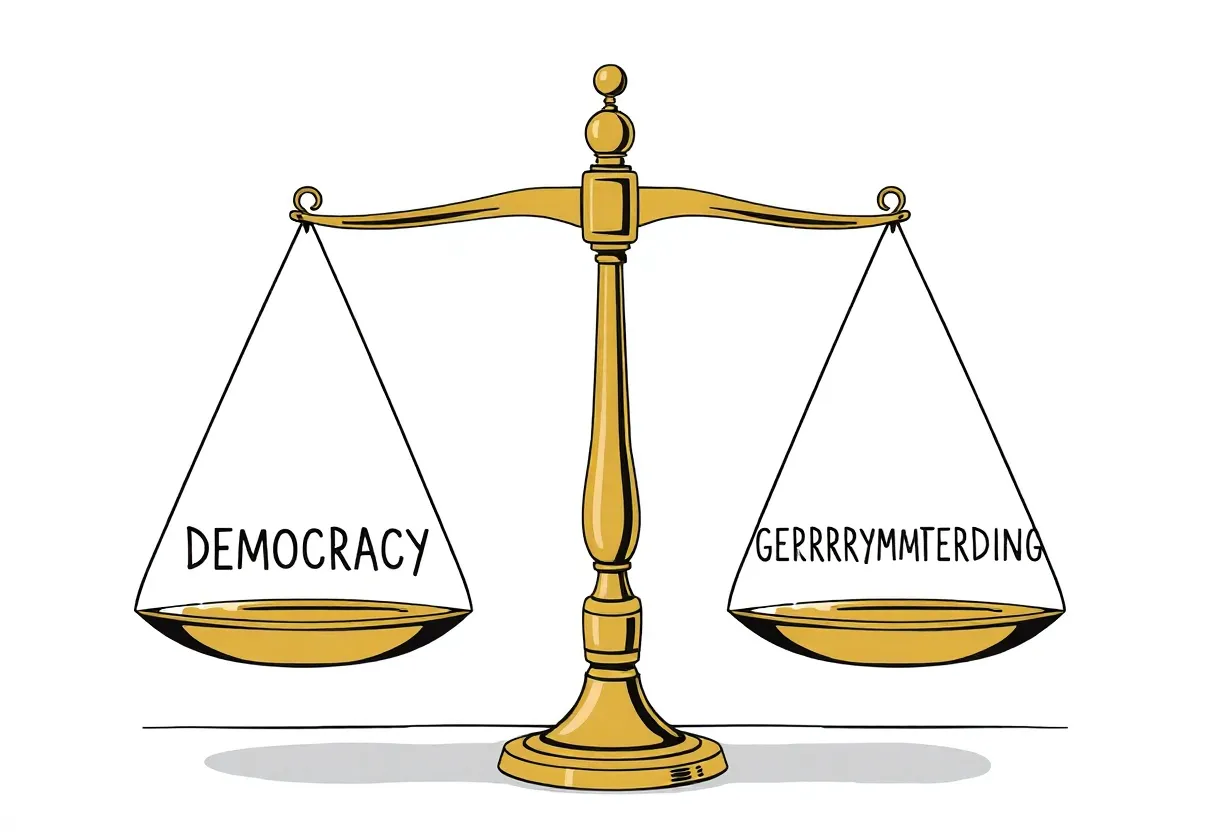
Tim Wood argues for the elimination of gerrymandering and the Electoral College to strengthen democracy in the U.S. He emphasizes the need for reforms that ensure majority rule and fair representation. Wood highlights how these systems exacerbate political divides and undermine the democratic process, calling for foundational changes in how elections are conducted.
COLUMBIA, SC – Tim Wood, inspired by the writings of Carol Lucas and Frank Wainwright, has penned an opinion piece advocating for the elimination of gerrymandering and the Electoral College to promote a stronger democracy in the United States. He argues that these systems fundamentally undermine the principles of majority rule and contribute to the growing partisan divide.
Gerrymandering has been a contentious issue in American politics since its inception in 1788, when the first attempts to manipulate district lines emerged in response to the political climate surrounding James Madison. The term itself is derived from Elbridge Gerry, who, as governor of Massachusetts in 1812, approved a controversial redistricting bill that benefited his party at the expense of the opposition.
Wood describes gerrymandering as inherently wrong, emphasizing its role in exacerbating divisions within the electorate. He contends that both gerrymandering and the Electoral College operate against the principles of a majority-rule society and therefore advocate for their elimination as necessary reforms. The Electoral College, conceived in 1787, was intended to balance different viewpoints on presidential elections, choosing between Congressional selection and direct popular voting.
Concerns regarding the disconnect between the Electoral College results and the popular vote have been voiced repeatedly. Wood highlights instances where candidates have secured the presidency while receiving fewer votes than their opponents, raising questions about the democratic integrity of the electoral process.
The Apportionment Act of 1842 was a significant piece of legislation designed to ensure fair representation by mandating single-member districts for states with multiple House seats, aiming to align representation more closely with population. Wood notes that district sizes fluctuate based on population density, which means that rural areas often encompass larger electoral districts compared to urban settings.
Wood advocates for a return to foundational democratic principles as a strategy to mitigate partisan divides stemming from gerrymandering and the Electoral College. He suggests that abolishing these systems could pave the way for a purer electoral process. His vision includes introducing several reforms to establish a true majority-rule democracy, which he believes could include:
- Implementing term limits for all government positions at both state and federal levels.
- Establishing restrictions on the time and monetary resources allocated to political campaigns.
- Modifying the party system to categorize political ideologies during national censuses, offering a clearer representation of the political spectrum.
Wood also envisions potential changes that would allow citizens to vote on term limits for federally appointed judges, including Supreme Court justices, enhancing the notion of majority rule.
A semi-retired resident of Beaufort, SC, Wood has transitioned from a career in construction and custom woodwork to advocating for democratic reform. His opinion piece represents a broader movement among citizens who seek to recalibrate U.S. governance to reflect genuine democratic values.
Frequently Asked Questions
What is gerrymandering?
Gerrymandering is the practice of drawing voting district boundaries in a way that advantages a particular political party or group.
Why does Tim Wood want to abolish the Electoral College?
Wood believes the Electoral College creates a disconnect between the popular vote and the final election results, undermining a majority-rule democracy.
What reforms does Wood propose for U.S. democracy?
He proposes implementing term limits for politicians, limiting campaign resources, and redesigning the party system to better represent diverse ideologies.
Key Features of Wood’s Advocacy
| Feature | Description |
|---|---|
| Gerrymandering | Manipulation of voting district boundaries to favor a political party. |
| Electoral College | A system that elects the President through electors, which can sometimes go against the popular vote. |
| Proposed Reforms | Term limits, campaign spending limits, and ideological classification in the census. |
Deeper Dive: News & Info About This Topic
HERE Resources
Additional Resources
- Your Island News: Let’s Fix Our Voting System
- Wikipedia: Gerrymandering
- SCOTUS Blog: Justices Question Finding on Gerrymandering
- Google Search: Electoral College
- Washington Post: Gerrymandering and the Supreme Court
- Encyclopedia Britannica: Electoral College