
News Summary
Beaufort County, South Carolina, is experiencing a surge in Florida manatee sightings this summer, with over 142 reports to the SCDNR. Local waters provide ideal habitats for these gentle giants, which migrate north each spring from Florida. The increase highlights both migratory patterns and public awareness regarding the importance of manatees in the Lowcountry ecosystem. Observers are encouraged to report sightings while following safety regulations, as manatees face threats from boat strikes and harmful algal blooms.
Beaufort County, South Carolina is witnessing an uptick in Florida manatee sightings this summer as these gentle giants spend time in the area’s shallow waters. With over 142 official sightings reported to the South Carolina Department of Natural Resources (SCDNR) this year, 53 of these have been noted in the Beaufort area alone. The increase, reflective of both manatee migratory patterns and enhanced public awareness, highlights the importance of these marine mammals in the Lowcountry ecosystem.
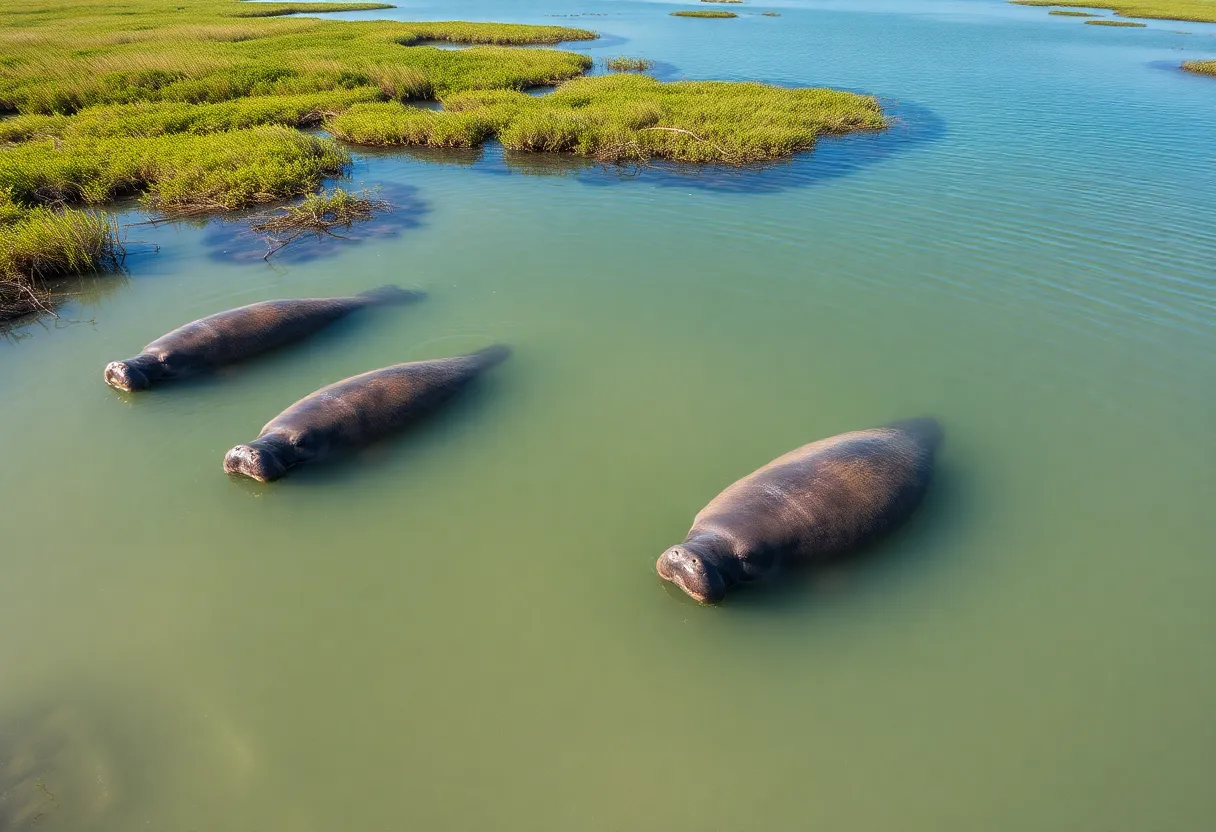
Florida manatees, which can tip the scales at over a ton and stretch up to 13 feet in length, are typically spotted in South Carolina from April through November. These mammals migrate north from Florida each spring in search of warmer coastal waters, making their presence felt in Beaufort County when ocean temperatures rise. As temperatures begin to drop below 68 degrees in the fall, manatees will migrate back south to their warmer habitat in Florida.
In recent weeks, there have been 24 reported manatee sightings in Beaufort County, indicating a healthy influx of these animals. This region hosts several prime spots for observing manatees, including Broad Creek, Skull Creek, Broad River, Shelter Cove Marina, and Harbour Town Marina. Their preference for sheltered, slow-moving waters in both salt and fresh environments makes these areas ideal for spotting them.
Due to their enormous size, manatees are relatively easy to spot, but individuals looking to catch a glimpse of them are encouraged to wear polarized sunglasses. This type of eyewear can minimize glare, allowing for better visibility of the animals just beneath the water’s surface.
Despite their gentle nature, manatees face several threats that put them at risk. The primary dangers include being struck by boats, entangled in fishing equipment, and being affected by harmful algal blooms, often referred to as red tides. As a result, it is critical for onlookers and boaters to observe manatees from a safe distance. Federal and state regulations strictly prohibit touching, feeding, or providing water to these animals, with violations potentially leading to fines or imprisonment.
Manatees have been recorded in South Carolina since 1850, although an accurate count of their total population in the state remains elusive. It is estimated that there are about 8,000 manatees in the United States, with the majority residing in Florida year-round. They are classified as endangered, and their seasonal migrations along the Atlantic coastline lead to occasional sightings in South Carolina.
To promote further conservation, the SCDNR encourages the public to report sightings through their Manatee Sighting Form, which allows individuals to submit photos for identification based on unique scar patterns. If anyone witnesses an injured or stranded manatee, they are urged to contact the SCDNR wildlife hotline at 1-800-922-5431.
As boaters navigate the waters where manatees are known to feed, maintaining a low speed and a heightened awareness is crucial to minimizing the risk of collisions. Engaging in practices such as avoiding the feeding or watering of manatees is essential in preventing additional risks involved with their close proximity to docks and marinas.
Manatees are protected under the Marine Mammal Protection Act and the Endangered Species Act, and measures against harassment or harm carry serious penalties. Efforts to preserve their population and habitat continue to be important not just for the survival of these majestic creatures but also for the overall health of the marine ecosystem in South Carolina’s Lowcountry.
Deeper Dive: News & Info About This Topic
HERE Resources
Additional Resources
- Explore Beaufort SC
- Wikipedia: Manatee
- Eat Stay Play Beaufort
- Encyclopedia Britannica: Manatee
- Post and Courier
- Google Search: manatees in South Carolina
- Island Packet
- Google Scholar: Florida manatees
- Explore Beaufort SC
- Google News: manatee sightings Beaufort