
Beaufort, South Carolina, October 17, 2025
News Summary
The South Carolina Department of Natural Resources reports that manatee sightings have reached an all-time high, as these gentle giants return to the state’s coastal waters. Known for their size, these seasonal visitors prefer shallow tidal creeks for feeding. With public participation in reporting sightings encouraged, residents are urged to report any injured or dead manatees. Legal protections exist to safeguard these marine mammals from harm, ensuring their continued presence in South Carolina.
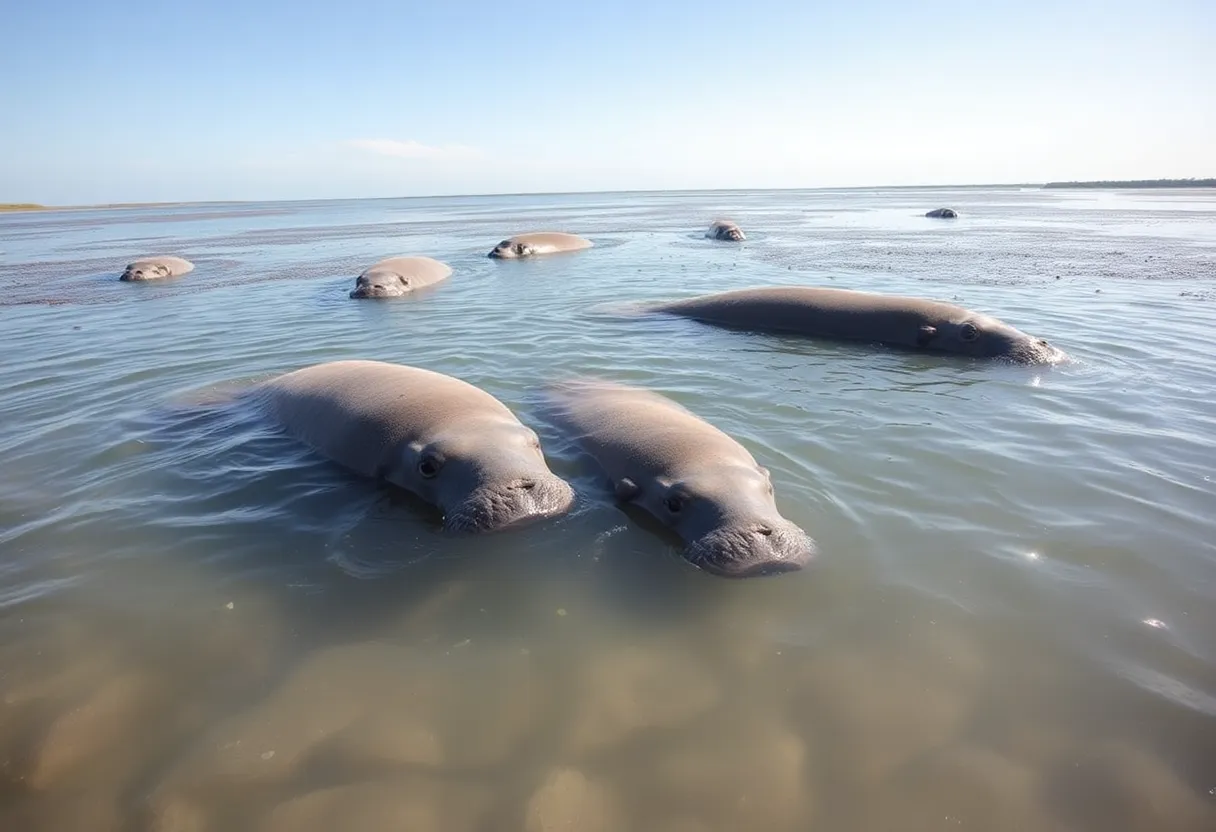
Beaufort, South Carolina – The South Carolina Department of Natural Resources announced on Wednesday that more manatee sightings have occurred in 2025 than in any previous year. As the warm-weather season begins, the gentle marine mammals, also known as sea cows, are making their presence felt along the South Carolina coast.
Manatees can grow to around 10 feet in length and weigh up to a ton. They are seasonal visitors to South Carolina, typically arriving in May and departing by November when water temperatures fall below 68 degrees Fahrenheit. During their stay, manatees prefer to feed in Beaufort’s shallow tidal creeks.
While the exact population of manatees in South Carolina remains unknown due to the challenges of counting them in murky waters, they represent a small fraction of the estimated 6,600 manatees in the United States. The majority of these marine mammals can be found in Florida. Public participation is encouraged in reporting manatee sightings and providing photographs online. Key identifiers for monitoring manatees include images of scars on their backs and tails.
However, approaching manatees by boat for photography is discouraged and can potentially harm the animals. In case of an incident involving injured or dead manatees, individuals should report the matter to the SCDNR wildlife hotline at 1-800-922-5431. If a boat collides with a manatee, boaters are advised to remain nearby and contact SCDNR or the U.S. Coast Guard on VHF Channel 16 for assistance.
Coastal residents and visitors can aid manatees by staying vigilant while boating and avoiding actions that could harm the animals. Feeding or harassing manatees is illegal and can lead to higher mortality rates due to increased boat strikes. Manatees are protected under the Marine Mammal Protection Act of 1972 and the Endangered Species Act of 1973, both making it illegal to hunt, harass, capture, or kill any marine mammal. Violations can result in a federal fine of up to $50,000 and/or one year in prison.
In March 2017, manatees were reclassified from “endangered” to “threatened” due to increasing numbers and better habitat conditions. However, they still face threats such as boat strikes, entanglement in fishing gear, and harmful algal blooms (red tides). Researchers are currently monitoring individual manatees as part of a broader study to assess their health and habitat usage.
Throughout the warmer months, manatees migrate to South Carolina’s coast, returning to Florida in September and October. The average gestation period for manatees is about one year, and calves depend on their mothers for one to two years. Residents can help protect these gentle giants by looking for them before starting boat motors, navigating cautiously in shallow waters, and adhering to “slow speed,” “no wake,” and manatee warning signs. Boaters should also be on the lookout for signs of manatees, including their backs, tails, and distinctive “footprints,” which are circular swirls on the water surface indicating a swimming manatee.
FAQ
What year are more manatee sightings reported in South Carolina?
More manatee sightings have occurred in 2025 than in any previous year.
What are manatees, also known as sea cows?
Manatees are gentle marine mammals that can grow to around 10 feet in length and weigh up to a ton.
When do manatees typically arrive and depart from South Carolina?
Manatees typically arrive in May and depart by November when water temperatures fall below 68 degrees Fahrenheit.
What should you do if you encounter an injured or dead manatee?
Injured or dead manatees should be reported to the SCDNR wildlife hotline at 1-800-922-5431.
Is it legal to feed or harass manatees?
Feeding or harassing manatees is illegal and can lead to higher mortality rates due to increased boat strikes.
What protection do manatees have under federal law?
Manatees are protected under the Marine Mammal Protection Act of 1972 and the Endangered Species Act of 1973.
What is being done to monitor the manatee population?
Researchers are monitoring individual manatees as part of a broader study to assess their health and habitat usage.
Key Features of Manatees in South Carolina
| Feature | Details |
|---|---|
| Size | Can grow to around 10 feet in length and weigh up to a ton. |
| Arrival and Departure | Arrive in May and depart by November. |
| Population in the U.S. | Estimated 6,600 manatees, mostly in Florida. |
| Legal Protection | Protected under the Marine Mammal Protection Act and the Endangered Species Act. |
| Community Involvement | Public encouraged to report sightings and provide photographs. |
Deeper Dive: News & Info About This Topic
HERE Resources
Florida Manatees Sightings Increase in Beaufort County
Additional Resources
- Explore Beaufort SC: Record Number of Manatees
- Wikipedia: Manatee
- Explore Beaufort SC: Manatees Back in Beaufort
- Google Search: Manatees Return to South Carolina
- Post and Courier: Manatees on the Move
- Encyclopedia Britannica: Manatee
- Count on 2: Manatees Make a Return
- Google News: Manatees South Carolina
- Island Packet: Manatees in South Carolina
- Google Scholar: Manatee Research