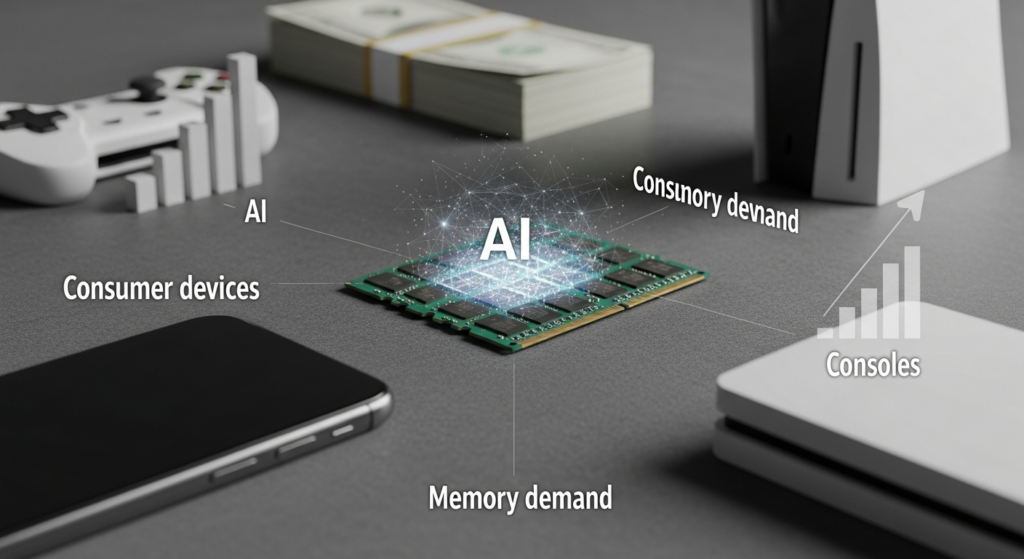
The burgeoning demand for specialized memory chips, driven by the rapid expansion of artificial intelligence infrastructure, is creating a ripple effect across the global technology supply chain. This shift is increasingly linked to tighter supplies of memory and storage components essential for consumer devices, a trend that could translate into higher prices for everything from smartphones to gaming consoles.
Artificial intelligence systems, particularly large language models and advanced computing clusters, require vast quantities of high-bandwidth memory (HBM) to operate efficiently. Manufacturers of these critical components are prioritizing production for AI applications, which offer higher profit margins and are central to the current technological arms race. This strategic allocation of resources means less manufacturing capacity is dedicated to the more common dynamic random-access memory (DRAM) and NAND flash storage used in personal computers, mobile phones, and other consumer electronics.
The consequence of this reorientation in manufacturing is a potential constraint on the availability and an increase in the cost of memory and storage modules for consumer-grade products. Device manufacturers, facing elevated component prices, may pass these costs onto consumers. This could affect a wide range of purchases, including new laptops for students, upgraded smartphones for daily use, or the latest generation of video game consoles.
Industry analysts and business publications have noted this developing pressure on the component supply chain. While the exact timing and magnitude of price adjustments remain subject to market forces, the underlying dynamic of intense competition for memory resources is established. The trend suggests that consumers considering new electronics purchases in the coming months may encounter higher price tags than in previous years, reflecting the broader economic forces at play in the technology sector.
### Why it matters in Beaufort
The global dynamics of technology supply chains have direct implications for residents and institutions in Beaufort. Households planning to upgrade personal computers or replace mobile devices may find their budgets stretched by these anticipated price increases. For organizations like the Beaufort County School District, which regularly procures technology for classrooms and administrative use, or the University of South Carolina Beaufort, which maintains extensive computing labs and infrastructure, rising component costs could affect procurement strategies and long-term technology investments. Understanding these market pressures is crucial for individuals and entities in Beaufort as they navigate future purchasing decisions in an increasingly interconnected technological landscape.