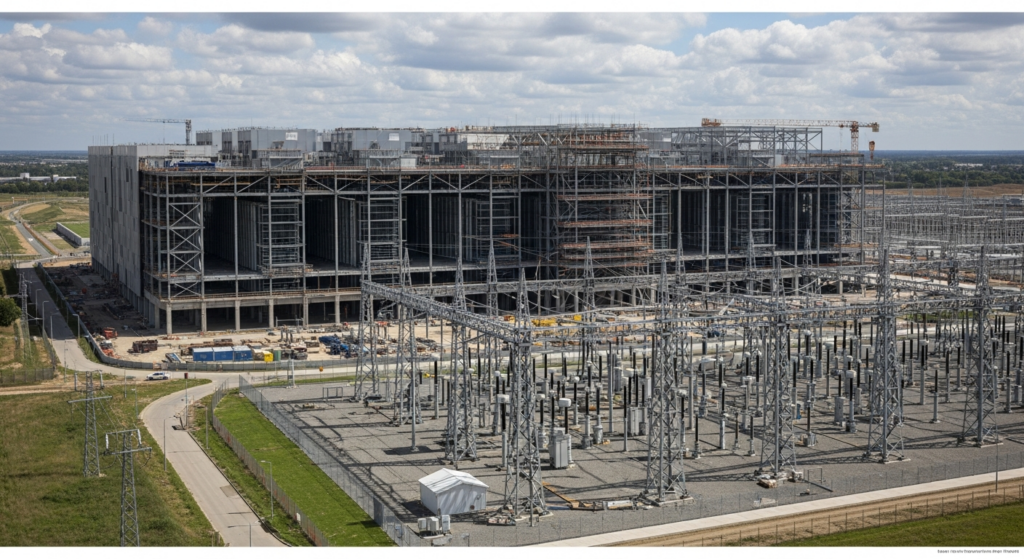
The escalating demand for artificial intelligence data centers across the United States is placing unprecedented pressure on existing power grids and reshaping how communities approach economic development. These facilities, critical for processing vast amounts of data, require substantial and reliable electricity supplies, making grid capacity a primary factor in site selection for technology companies.
This national trend has brought discussions about power infrastructure and long-term planning into sharper focus for municipalities and counties, including Beaufort. While no specific AI data center projects have been announced for the immediate Beaufort area, the broader economic and technological shifts mean that local leaders are increasingly considering the implications for the region’s energy landscape and land use.
Technology and energy sector analyses consistently link the rapid growth of AI data centers to a corresponding surge in power demand. Unlike traditional industrial facilities, these centers operate 24/7, consuming megawatts of electricity for computing, cooling, and backup systems. This sustained, high-intensity consumption necessitates robust transmission lines, substations, and reliable generation sources, often requiring significant upgrades to existing utility infrastructure.
For Beaufort County, where economic development initiatives are ongoing, understanding these evolving demands is crucial. The availability of sufficient and stable power is now as significant as access to transportation networks or a skilled workforce when attracting large-scale technology investments. Local economic development debates are increasingly incorporating discussions about how to ensure the regional grid can support future growth without strain on existing resources or undue impact on ratepayers.
Officials such as Mayor Phil Cromer of Beaufort and Chair of the County Council Alice Howard are tasked with overseeing the long-term planning that could accommodate such developments. Their offices, along with City Manager Eric Clawson, play a pivotal role in zoning decisions, land-use policies, and coordinating with utility providers to assess and potentially enhance local power capabilities. Corridors like US-21 / Sea Island Parkway or Trask Parkway, which are primary arteries for development and growth, would be critical considerations for any future infrastructure needs.
Land-use planning within Beaufort and Beaufort County must adapt to the unique requirements of data centers, which often necessitate large parcels of land, access to cooling water (though not explicitly stated as a local need, it’s a general data center requirement), and proximity to fiber optic networks. The balance between attracting new industries and preserving the character of the Lowcountry region remains a central challenge.
Furthermore, the workforce implications of a growing technology sector, even one focused on highly automated data centers, could influence local educational institutions. The Technical College of the Lowcountry and the University of South Carolina Beaufort could potentially see increased demand for programs related to electrical engineering, network administration, and data center operations, preparing a local talent pool for future opportunities.
As the national conversation around AI data center expansion continues, Beaufort remains part of a broader regional and national dialogue on how communities can strategically position themselves for technological advancement while managing the associated infrastructure and environmental considerations. The summer months, often periods of peak energy consumption, serve as a reminder of the importance of grid reliability and capacity planning.
### Why it matters in Beaufort
The rising energy demands of artificial intelligence data centers present both opportunities and challenges for Beaufort. The Beaufort County Government, alongside the City of Beaufort, is responsible for long-range planning that balances economic growth with infrastructure capacity. Ensuring the region’s power grid can support future industrial and technological development without compromising the reliability for existing major employers like Marine Corps Air Station Beaufort, Parris Island, and Beaufort Memorial Hospital is a critical consideration. Proactive engagement with utility providers and careful land-use planning will be essential to navigate these national trends, influencing everything from zoning decisions along key corridors like SC-170 to potential workforce development initiatives at the Technical College of the Lowcountry, ultimately shaping the economic trajectory of the city.