For hunters across Beaufort and the broader Lowcountry region, the period leading up to turkey season is a critical time for meticulous preparation. Ensuring all equipment is in order and skills are honed can significantly impact the experience once the season opens. From legal necessities to advanced fieldcraft, a thorough preseason checklist is indispensable.
One of the most fundamental aspects of legal and ethical turkey hunting involves proper documentation. Hunters are consistently advised to keep their turkey tags readily accessible, along with a pen, to ensure immediate and accurate tagging of any harvested bird. This practice is not merely a formality but a legal requirement in South Carolina, designed to maintain accurate wildlife management data and prevent unlawful harvesting. Neglecting this simple step can lead to significant penalties, underscoring the importance of preparedness before even stepping into the field.
Wild turkeys possess exceptionally keen eyesight, a primary defense mechanism that necessitates careful concealment from hunters. Effective camouflage is paramount, requiring patterns that blend seamlessly with the specific habitat. In the Beaufort area, this often means selecting camouflage suited for hardwood ridges and pine flats, common in the region’s diverse ecosystems, including areas around the ACE Basin National Wildlife Refuge. Beyond clothing, covering all exposed skin is vital; gloves and a face mask are essential to break up the human silhouette and obscure movement, which turkeys are quick to detect.
Weaponry selection and preparation are central to a successful hunt. Most states, including South Carolina, permit turkeys to be taken with shotguns, muzzleloaders, or archery equipment. For shotgun users, proper patterning is non-negotiable. This involves testing a properly installed turkey choke, matched specifically to the ammunition intended for use, to ensure a dense and consistent shot pattern at various distances. Carrying enough ammunition to both pattern the shotgun and sustain hunting throughout the season is a practical consideration. Bowhunters face their own set of rigorous preparations, needing to ensure their setup is meticulously tuned and legal for state regulations. Practicing from realistic seated positions, often mimicking how one would shoot from a ground blind or against a tree, is crucial. Additionally, researching and testing broadheads for accuracy, penetration, and reliability is a critical step to ensure a humane and effective harvest.
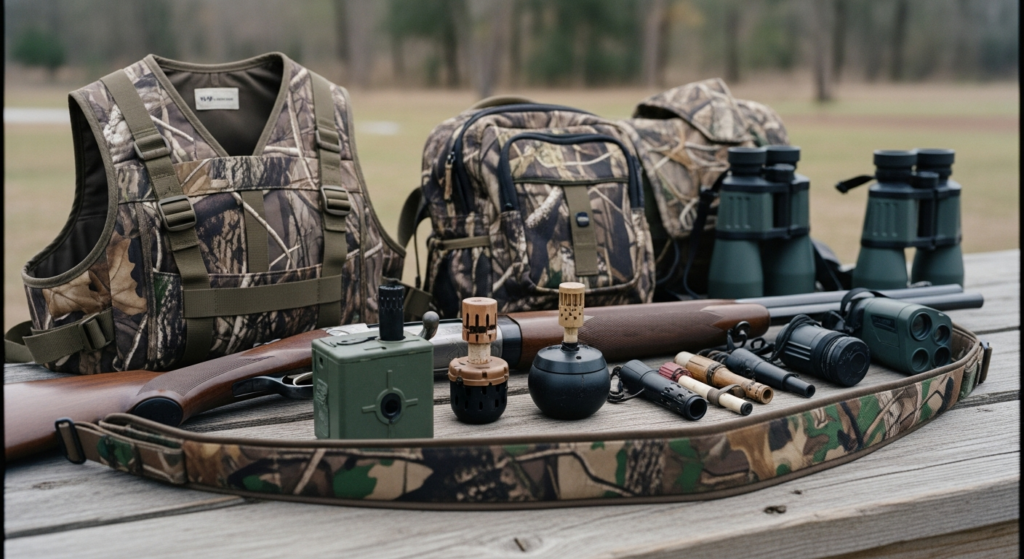
Beyond the primary weapon, a suite of specialized gear enhances a hunter’s capabilities. Electronic ear protection is highly recommended, not only for hearing protection during shotgun blasts but also for amplifying subtle sounds of approaching turkeys. A diverse array of calls is also essential; diaphragm, slate or glass pot-and-striker, box, and wing bone calls each offer distinct vocalizations that can entice wary birds. Mastering several call types allows hunters to adapt to different scenarios and turkey behaviors. Modern navigation tools, such as mapping applications like HuntStand and onX Hunt, have become invaluable. These tools assist in identifying property boundaries, legal access points, potential roosting habitat, and common travel corridors, all critical for navigating public and private lands in Beaufort County responsibly.
Additional field gear focuses on comfort, safety, and utility. Carrying sufficient water and food is vital for sustained periods in the field, especially during warmer spring hunts. A sharp, reliable knife is indispensable for field dressing and processing a harvested bird. Optics, such as binoculars, aid in spotting distant birds or confirming details in dense cover. A compact first aid kit is a non-negotiable safety item for any outdoor excursion. Finally, a well-organized turkey vest or lightweight backpack helps consolidate calls, ammunition, water, and other essentials, ensuring they are readily accessible when needed.
Comfort and protection from the elements and pests are also key considerations. During the warmer months, which include the current summer and extend into spring hunting seasons, ticks and mosquitoes can be prevalent in the Lowcountry. Clothing treated with permethrin offers effective tick protection, while a Thermacell device can provide a significant deterrent against mosquitoes, particularly during peak mosquito season. Hunters are also advised to familiarize themselves thoroughly with their state’s specific turkey-hunting rules and regulations, as these can vary. Optional gear, such as rangefinders for precise distance measurement or shooting sticks for added stability, should be tailored to individual hunting styles and the expected conditions of the hunting grounds.
Why it matters in Beaufort
For residents of Beaufort and those who enjoy the natural resources of Beaufort County, responsible turkey hunting preparation is a significant aspect of outdoor recreation and conservation. The Lowcountry’s unique ecosystems, including the diverse habitats found near areas like the ACE Basin National Wildlife Refuge and the extensive pine and hardwood forests, offer prime opportunities for turkey hunting. Adhering to comprehensive gear checklists and safety protocols ensures that hunters contribute to sustainable wildlife management and maintain the integrity of these natural spaces. Proper preparation also minimizes risks, promoting a safer environment for all who utilize the region’s public lands and private properties for outdoor pursuits, from hunting to hiking within the broader Beaufort area. This commitment to readiness reflects a dedication to preserving the rich outdoor heritage of the Lowcountry for future generations. This commitment to readiness reflects a dedication to preserving the rich outdoor heritage of the Lowcountry for future generations.