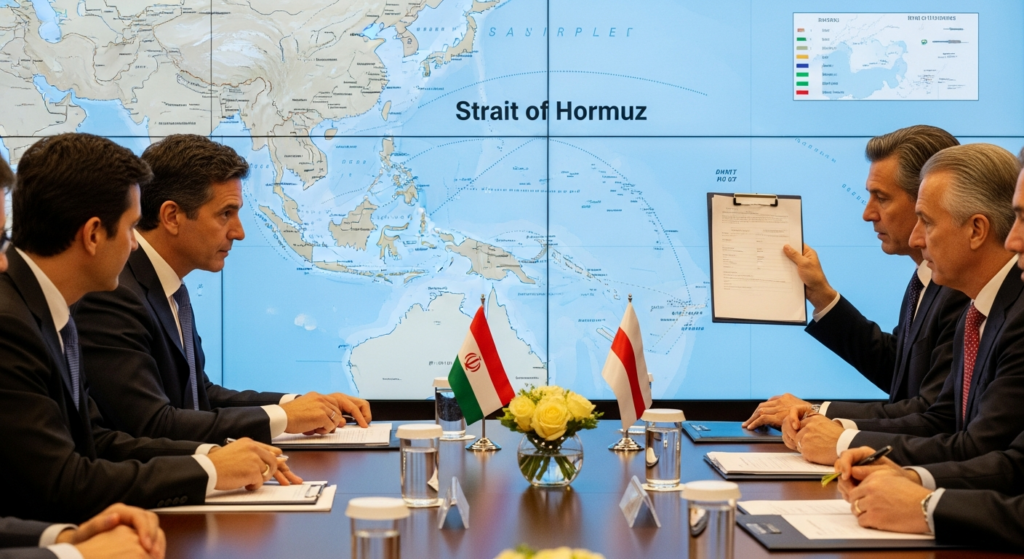
Non-federal reports indicate that the United States and Iran have reached an agreement to halt recent attacks in the Persian Gulf region. The accord follows a period of renewed hostilities that targeted shipping and military sites around the Strait of Hormuz, a critical chokepoint for global trade.
Details of the agreement remain sparse, but sources suggest that both nations have committed to de-escalating tensions. This move is seen as a significant development in managing regional security and ensuring the free flow of maritime traffic.
Technical talks are expected to resume concerning the memorandum of understanding related to the Strait of Hormuz and protocols for vessel movement. These discussions are crucial for establishing clear guidelines and preventing future miscalculations that could lead to further conflict.
The situation has been under close observation by international bodies and regional powers, given the strategic importance of the Strait of Hormuz. The potential for escalation has been a persistent concern, impacting global energy markets and international relations.
The packet of information regarding this agreement is reportedly undergoing political and national-security review within the U.S. government. This process is standard for matters involving diplomacy, potential military implications, and sanctions-sensitive regional security issues. The review ensures that all aspects of the agreement are thoroughly vetted before any official pronouncements are made.
The agreement to stand down and resume talks suggests a willingness on both sides to engage in diplomatic solutions rather than further military confrontation. The focus now shifts to the substance of the technical discussions, which will aim to solidify the terms of the memorandum and ensure compliance.
The Strait of Hormuz has historically been a flashpoint, and any agreement that reduces the risk of conflict there is viewed as a positive step. The international community will be monitoring the progress of these talks closely, hoping for a sustained period of calm and cooperation in the region. The implications for global security and economic stability are substantial, making this diplomatic breakthrough a noteworthy event.
Why it matters in Beaufort:
The diplomatic developments between the U.S. and Iran, particularly concerning the Strait of Hormuz, have a tangible connection to Beaufort. The region’s economy is significantly influenced by global trade routes and energy prices, which can be directly impacted by instability in key maritime passages. For Beaufort Memorial Hospital, a major employer in the area, fluctuations in the global economy can affect healthcare demand and resource allocation. Furthermore, the presence of Marine Corps Air Station Beaufort (MCAS Beaufort) and Parris Island underscores the national security interests at play. Any de-escalation in international conflicts reduces the potential for broader military engagements, which could indirectly affect military readiness and personnel deployment from installations like MCAS Beaufort. The stability of international relations is therefore a factor that resonates even in a community focused on its local economy and military presence.