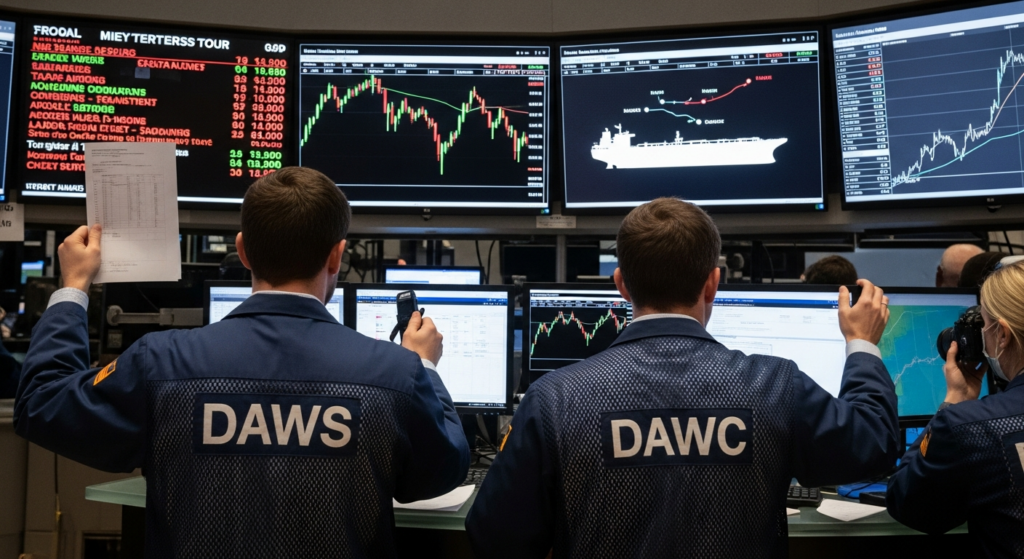
Global financial markets are experiencing a period of uncertainty, with Asian stocks showing choppy performance and oil prices rising. This volatility stems from a U.S.-Iran “halt” following renewed attacks, leaving traders and investors focused on the potential risks to shipping in the Strait of Hormuz. Market analyses indicate that these moves are connected to broader concerns about Gulf shipping lane security, the strength of the U.S. dollar, expectations regarding interest rates, and the overall appetite for investor risk.
While these events unfold on an international stage, their implications can reach down to local economies, including Beaufort. The price of oil, a fundamental commodity, directly impacts transportation costs for businesses that rely on shipping and delivery services. For companies operating in Beaufort, whether in logistics, retail, or manufacturing, higher fuel prices can translate into increased operational expenses. These costs may eventually be passed on to consumers in the form of higher prices for goods and services, affecting household budgets.
Furthermore, the broader stock market fluctuations can influence local investment portfolios and retirement savings. A volatile market can lead to a more cautious approach from investors, potentially impacting capital available for local business expansion or investment. The interconnectedness of global finance means that events far from Beaufort can still shape the financial landscape for individuals and businesses within the community.
Interest rate expectations also play a significant role. Central bank decisions on interest rates can affect the cost of borrowing for businesses and individuals. Higher rates can make loans more expensive, potentially slowing down business investment and consumer spending on large purchases like homes and vehicles. Conversely, lower rates can stimulate economic activity. The current market uncertainty means that future rate decisions by major central banks are being closely watched, with potential implications for local lending and economic growth.
The security of the Strait of Hormuz, a critical chokepoint for global oil supply, remains a key concern. Any disruption in this region can lead to significant spikes in oil prices, creating a ripple effect across the global economy. For Beaufort, this translates to a heightened awareness of energy costs and their potential impact on the cost of living and doing business. Local businesses that depend on imported goods or export their products may face increased shipping costs and longer lead times, depending on the severity of any disruptions.
Navigating this complex global environment requires a keen understanding of how international events translate into local economic conditions. The interplay of geopolitical risks, energy prices, and monetary policy creates a dynamic backdrop against which Beaufort businesses and consumers must operate. The focus on the Strait of Hormuz underscores the fragility of global supply chains and the importance of stable international relations for predictable market conditions. This global market dynamic, while distant, serves as a concrete reminder of the interconnectedness of the world economy and its tangible effects on local commerce and individual financial well-being.