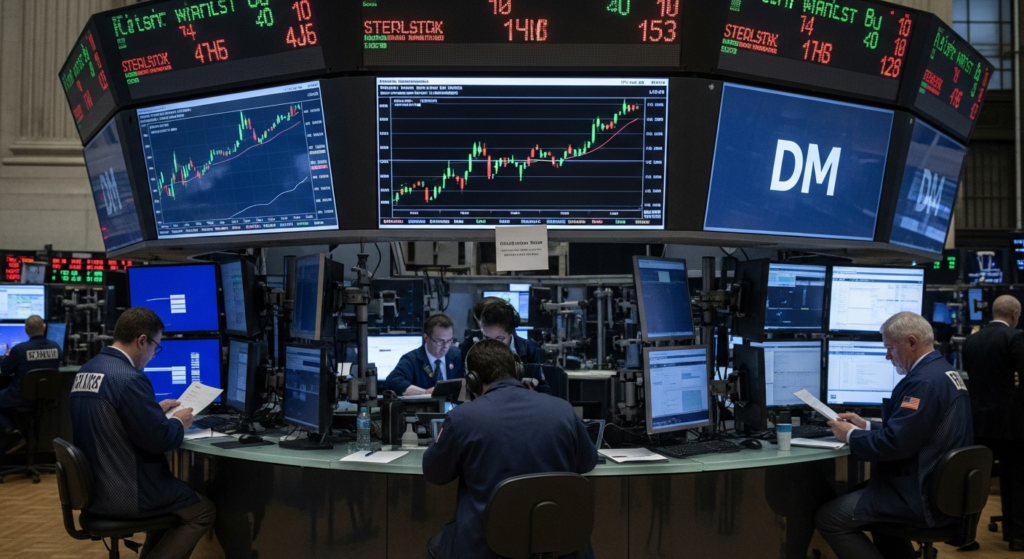
Global stock markets registered a largely flat start to the third quarter on Friday, July 3, 2026, as traders across the nation processed recent commentary from the Federal Reserve and observed a significant drop in oil prices. This cautious positioning marks the beginning of the second half of the year, with economic data and central bank signals driving investor sentiment.
A global stock gauge edged lower, reflecting a broader market digesting various economic indicators. Investor focus remains keenly on the Federal Reserve’s stance on monetary policy, with market participants scrutinizing any signals regarding future interest rate adjustments. The interplay between inflation concerns, employment data, and the Fed’s forward guidance continues to shape expectations for economic growth and corporate earnings.
Simultaneously, both U.S. crude and Brent crude oil prices experienced a decline. This movement in energy markets is a key factor influencing broader economic conditions, as fluctuating fuel costs can affect everything from consumer spending power to the operational expenses of businesses across the country. For a community like Beaufort, these national market shifts resonate through various local channels.
The dip in oil prices, for instance, directly impacts fuel costs for residents and businesses in Beaufort. Lower prices at the pump can offer some relief to household budgets, particularly for those commuting along major corridors such as US-21 / Sea Island Parkway or SC-170. The significant military presence in Beaufort, including personnel at Marine Corps Air Station Beaufort (MCAS Beaufort) and Marine Corps Recruit Depot Parris Island, also sees the effects of fuel price changes on their daily commutes and personal finances. Local transportation-dependent businesses, from delivery services to fishing charters operating out of the Beaufort River, may experience reduced operational costs, potentially influencing pricing for consumers.
Federal Reserve commentary and its implications for interest rates also hold relevance for Beaufort. Changes in interest rates affect borrowing costs for individuals seeking mortgages in neighborhoods like Habersham or Mossy Oaks, or for local businesses looking to expand. Institutions such as Beaufort Memorial Hospital or the Beaufort County School District, which manage significant budgets and may undertake capital projects, monitor these financial conditions as they can influence financing options and overall economic planning. The University of South Carolina Beaufort and the Technical College of the Lowcountry also operate within this economic landscape, with endowment performance and operational funding potentially influenced by broader market stability.
While the national market’s start to the second half of 2026 may appear modest, the underlying factors of Federal Reserve policy and oil price movements are significant. These elements contribute to the overall economic environment that shapes decisions for investors, businesses, and households in Beaufort, influencing everything from daily expenditures to long-term financial planning. The ongoing assessment of economic data by market participants underscores a period of careful observation as the year progresses.
### Why it matters in Beaufort
The national market trends, particularly the dip in oil prices and the Federal Reserve’s ongoing commentary, have tangible consequences for Beaufort. For residents, lower fuel costs can directly ease the burden on household budgets, providing more disposable income that could circulate through local businesses along Boundary Street or in downtown Beaufort. For major employers like Marine Corps Air Station Beaufort and Marine Corps Recruit Depot Parris Island, stable or declining fuel prices can indirectly benefit personnel and operational logistics. Furthermore, the broader economic sentiment influenced by Federal Reserve policy can impact local investment decisions, affecting everything from housing market activity in neighborhoods like Battery Point to the financial planning for institutions such as Beaufort Memorial Hospital, which serves a significant portion of the community. These national shifts are not isolated events but rather interconnected forces that shape the economic reality for individuals and institutions across Beaufort.