Golfers navigating the courses in and around Beaufort are often guided by a set of unwritten rules designed to enhance play, maintain safety, and preserve the integrity of the greens. These guidelines, which span from basic etiquette to specific course protection measures, are fundamental for both seasoned players and newcomers to the sport.
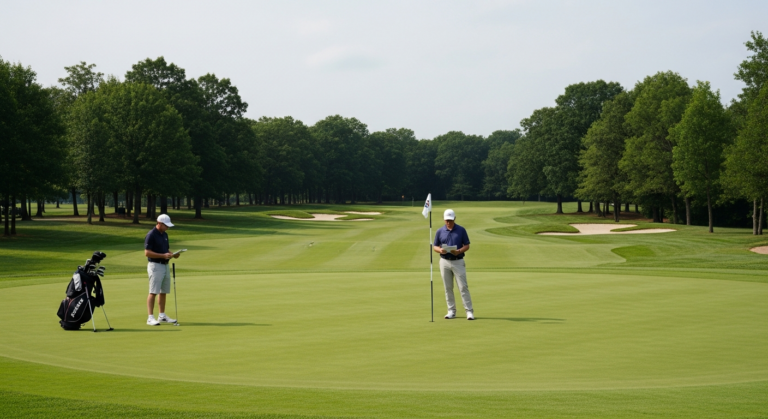
At the core of these practices is a commitment to basic course etiquette. This involves a series of considerations aimed at minimizing distractions and showing respect for others on the course. Players are expected to avoid talking, moving, or making noise while another golfer is preparing to strike the ball. It is also customary to stay out of a player’s line of sight and, crucially, to avoid walking on their putting line or casting a shadow across it. After a round or match, a simple handshake with opponents and playing partners, often accompanied by the removal of one’s cap, signifies good sportsmanship. Accepting corrections from more experienced players is also part of this foundational respect.
Maintaining a steady pace of play is another critical aspect of golf etiquette, particularly important on busy courses in the Beaufort area. To prevent delays, golfers are encouraged to keep pace with the group ahead, planning their next shot while walking between holes. The concept of “ready golf,” where players hit their shot when ready rather than strictly adhering to who is furthest from the hole (except in match play), helps to expedite the game. Promptly clearing the green after putting, moving bags or trolleys to the side, and allowing faster groups to play through are all practices that contribute to a smoother flow. Some courses implement specific procedures, such as a call-up hole on the 8th, where a group on the green, not yet putting, waves the following group through from the tee, then putts out after they tee off. When searching for multiple lost balls, splitting up can save time, but if a ball is certainly lost, it’s best to leave spare balls rather than prolonging the search.
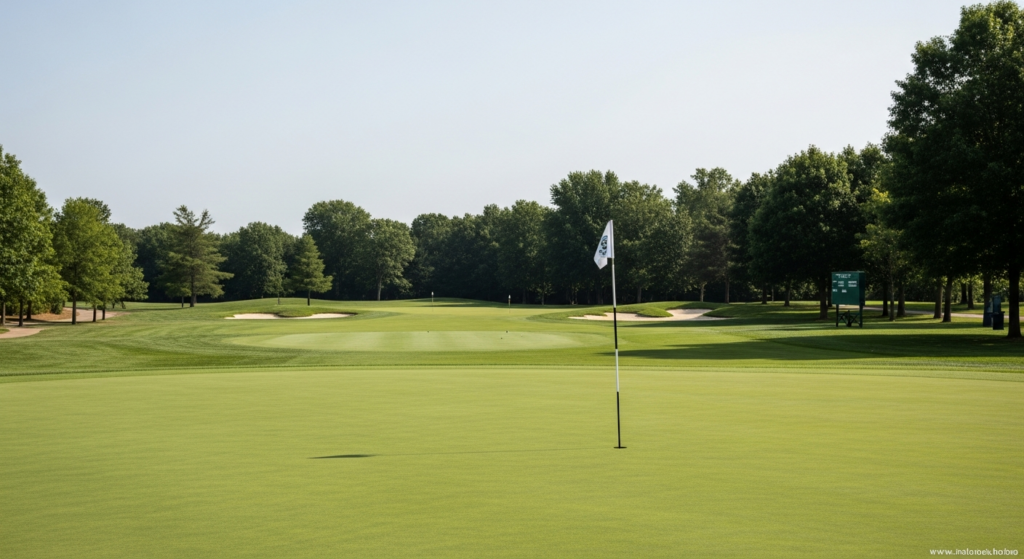
Protecting the course itself is paramount. This involves a series of actions to minimize wear and tear on the playing surface. Golfers are responsible for repairing pitch marks on the green, replacing divots on the fairway, and using grass seed to repair divots on tee boxes rather than replacing them with turf. Keeping golf bags and trolleys off tee boxes and greens helps prevent damage. Adhering to winter white lines and arrows, which often delineate areas of sensitive turf, is also crucial. When retrieving a ball from the hole, players should lift it by hand rather than scooping it out with a putter, which can damage the cup. Using designated steps or paths instead of walking on banks, taking free drops from ground under repair or the wrong green as specified by local rules, and following signage regarding buggy and trolley use, including requests for winter wheels, all contribute to course preservation.
Proper ball identification is essential to avoid penalties and maintain fair play. Before teeing off, golfers should mark their ball with a distinctive pattern or initials and declare which ball they are playing. If a provisional ball is hit, it must also be distinguishable from the original. Always checking the ball before playing it ensures that a player is hitting their own. Playing the wrong ball results in a two-stroke penalty in stroke play or loss of the hole in match play, requiring the player to replace their original ball where it was found.
Safety on the course is non-negotiable. Before taking a practice swing or a shot, golfers must always check that no one is behind them or in harm’s way. Shots should only be taken when golfers, walkers, and spectators are clear of the intended flight path. Standing at least two club lengths from someone playing is a common safety measure. On cross-over holes, vigilance is key, and players should wait until the group ahead is out of range before teeing off, especially on holes like the 5th. If a ball is struck and may hit someone or disappears from view, immediately and loudly shouting “Fore!” is critical. Conversely, upon hearing “Fore!”, golfers should duck and cover their heads without hesitation.
Common rules issues frequently arise, and understanding them can prevent unnecessary penalties. For a lost or out-of-bounds ball where no provisional was played, the rule typically dictates replaying from the previous position with a one-penalty stroke. Unless under specific winter rules on the fairway or when on the green, golfers are generally not permitted to lift or clean their ball. Touching bunker sand before taking a shot is prohibited. For an unplayable ball, a player can take a drop within two club lengths, no nearer the hole, for a one-penalty stroke. Improving a lie or swing by treading down live vegetation or moving branches is also against the rules.
Dress codes, while varying slightly between clubs, generally aim for a smart casual appearance suitable for golf. Prohibited items typically include jeans, sports shorts, rugby or football tops, sponsor tops, and generally sleeveless or collarless tops. Tailored shorts and golf-designer shirts are usually permitted. Golf shoes are often restricted to specific areas like the Stud bar or patio. Caps and hats are usually not allowed in the clubhouse, except for special events like a Christmas lunch. Finally, members are often asked to keep emergency mobile phones silent or switched off to maintain the tranquil atmosphere of the course.
When in doubt about any rule or etiquette, the best practice is to ask playing partners or inquire at the clubhouse. Ultimately, the overarching principle is to enjoy the game while upholding the spirit of golf.
Why it matters in Beaufort
Adhering to established golf etiquette and course management principles is particularly relevant for the numerous golf enthusiasts and visitors who frequent the courses in the Beaufort area. With institutions like the University of South Carolina Beaufort drawing students and faculty, and major employers such as Beaufort Memorial Hospital and Marine Corps Air Station Beaufort bringing in residents, the local golf scene sees consistent activity. These guidelines ensure that the region’s beautiful courses, which are a significant recreational asset, remain in excellent condition and provide a welcoming environment for all players. Respecting these practices contributes to the longevity and enjoyment of golf across the Lowcountry, reflecting positively on the community’s shared recreational spaces and the experience for all who visit or reside in Beaufort.