As the 2026 hunting season approaches, a new comprehensive guide has been released, offering foundational advice for individuals new to the sport. The resource outlines a structured approach to hunting, emphasizing legal compliance, safety, proper equipment, ethical field practices, and responsible game recovery. For those in the Beaufort area considering hunting, understanding these principles is crucial for a safe and successful experience in South Carolina’s diverse natural environments.
One of the guide’s primary directives is the completion of a state-approved hunter education course. These courses are designed to instill a deep understanding of hunting ethics, wildlife conservation, firearm safety, and state-specific regulations. South Carolina, like many states, mandates hunter education for most new hunters, ensuring participants are equipped with the knowledge to act responsibly in the field. The guide notes that these educational programs can take various forms: traditional classroom instruction, often supplemented by a practical field day; online instruction combined with a mandatory field day for hands-on experience; or, in some states, fully online coursework for adult learners. The choice of format often depends on individual learning preferences and state availability, but the core objective remains consistent: to produce informed and ethical hunters.
Beyond education, securing the correct hunting license and species-specific tags is a non-negotiable first step. The guide underscores that these legal documents are the gateway to lawful hunting, varying significantly by state, the type of game pursued, and even the specific hunting unit or zone. Hunters must meticulously research and obtain the appropriate licenses for their intended quarry, whether it be deer, waterfowl, or small game. Furthermore, gaining legal access to hunting land before opening day is paramount. This can involve hunting on public lands managed by state or federal agencies, which often have specific regulations and draw systems, or obtaining permission to hunt on private property, a process that requires respectful communication and adherence to the landowner’s rules. Understanding these access requirements prevents inadvertent trespassing and ensures a positive relationship between hunters and landowners.
The regulatory landscape for hunting is complex and highly localized, a point the guide stresses repeatedly. Season dates, which dictate when specific species can be hunted, are subject to change annually and vary by game unit within a state. Legal weapons, including restrictions on firearm types, ammunition, or archery equipment, are also defined by state law and often by specific hunting seasons or zones. Minimum calibers for firearms or draw weights for bows are frequently stipulated to ensure humane harvesting. Bag limits, which cap the number of animals a hunter can take, are critical for wildlife management and sustainability. Additionally, tagging or reporting requirements after a successful harvest are mandatory in most jurisdictions, providing vital data for wildlife biologists. These regulations can even differentiate based on the sex or age of the animal, reflecting sophisticated conservation strategies aimed at maintaining healthy wildlife populations. Navigating this intricate web of rules requires diligent research and adherence to official state wildlife agency publications.
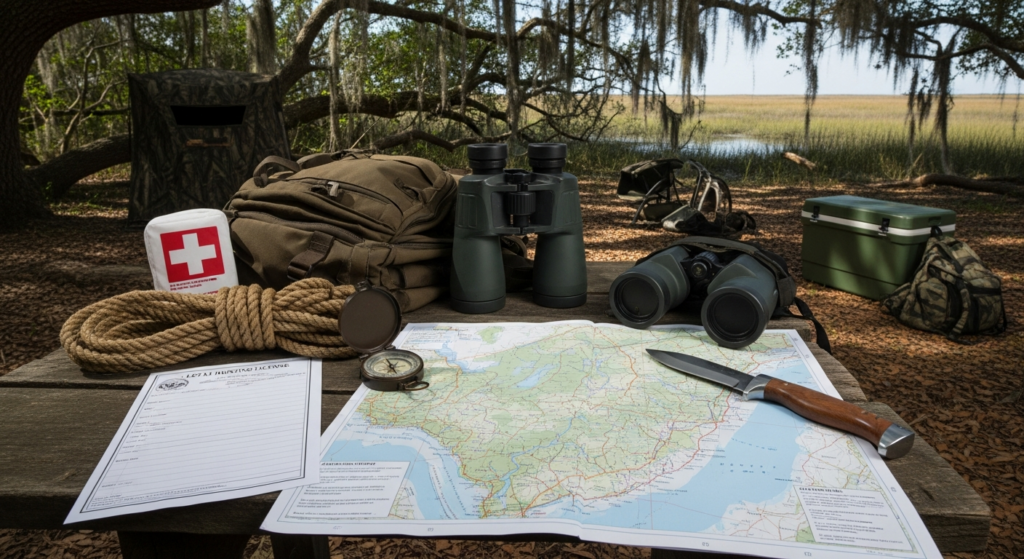
Equipping oneself properly is another cornerstone of the guide’s advice. A legal weapon, appropriate for the intended game, is the most obvious requirement, accompanied by sufficient practice ammunition or arrows to ensure proficiency. Beyond the weapon, essential items include the aforementioned licenses and tags, which must be carried at all times. Hunter orange clothing, where mandated, is crucial for visibility and safety, particularly during firearm seasons. Broken-in boots are recommended for comfort and support during long treks, while layered clothing allows hunters to adapt to changing weather conditions, a common occurrence in the Lowcountry. Binoculars are invaluable for scouting and identifying game from a distance. A day pack to carry essentials, ample water for hydration, and high-calorie snacks for sustained energy are also listed. For low-light conditions or unexpected overnight stays, a headlamp with extra batteries is indispensable. Finally, a sharp knife for field dressing and a comprehensive first-aid kit are critical for addressing minor injuries or emergencies in remote areas.
The initial investment in hunting gear can be substantial, and the guide provides approximate cost ranges for entry-level equipment. An entry-level rifle, complete with a basic scope, is estimated to cost between $450 and $800. For those preferring shotguns, suitable for deer or small game, the price typically ranges from $350 to $700. Archery enthusiasts looking for a compound bow package can expect to spend between $400 and $900. Beyond weapons, fundamental clothing layers and quality boots represent an additional investment of $200 to $400. Entry-level binoculars, essential for spotting game, are estimated at $100 to $250. These figures represent a starting point, and costs can escalate significantly with higher-end equipment or specialized gear. However, the guide emphasizes that functional, reliable equipment is available at these entry-level price points, making the sport accessible to new participants without requiring an immediate, prohibitive financial outlay.
Safety is paramount, and the guide dedicates significant attention to established protocols. The four fundamental rules of firearm safety are reiterated: treating every firearm as if it is loaded; always keeping the muzzle pointed in a safe direction; keeping one’s finger off the trigger until ready to shoot; and always being sure of the target, what is in front of it, and what is beyond it. These rules are non-negotiable and form the bedrock of responsible firearm handling. For hunters utilizing elevated stands, specific safety measures are highlighted, including the mandatory use of a full-body harness, a lineman’s belt for secure climbing, and a lifeline that remains attached from the moment a hunter leaves the ground until they return. These precautions are designed to prevent falls, which are a leading cause of serious injury among elevated hunters. Adherence to these safety guidelines is not merely a recommendation but a critical component of ethical and responsible hunting.
After a successful hunt, proper game recovery and processing are essential for both legal compliance and meat quality. The guide recommends immediately tagging the animal as required by state law, which typically involves attaching a physical tag to the carcass. Rapid cooling of the meat is crucial, especially in the warm summer months, to prevent spoilage. Keeping the meat clean during field dressing and transport is equally important to maintain its quality. Hunters must follow species- and state-specific rules for field dressing, which often dictate how the animal is prepared for transport, and transport regulations, which may include requirements for visible tags or specific packaging. For those who prefer professional assistance, the guide estimates that professional processing can cost around $80 to $200 or more per animal, depending on the species and the services requested. This final stage of the hunt ensures that the harvested animal is treated respectfully and its meat is prepared safely for consumption.
Why it matters in Beaufort
The principles outlined in this beginner hunting guide hold particular relevance for residents of Beaufort and the wider Lowcountry region. With significant natural areas like the ACE Basin National Wildlife Refuge offering managed hunting opportunities, understanding and adhering to these guidelines is crucial for public safety and the sustainable management of local wildlife populations. Responsible hunting practices, from completing hunter education courses to rigorously following safety protocols and game recovery procedures, directly contribute to the preservation of Beaufort’s rich ecological heritage. The guide’s emphasis on legal compliance and ethical conduct ensures that hunting remains a respected activity, safeguarding both participants and the diverse ecosystems that define the Beaufort landscape for future generations. It underscores the importance of informed participation in outdoor activities that interact directly with the region’s natural resources.